
Survey
In sailing, women and men are on the same starting line. But is equality real? A behind-the-scenes look at women’s performance.
Sailing is a mixed sport, where men and women compete in the same regattas and on the same boats. Yet behind this apparent equality, a question persists: do women have the same chances of performance and victory as their male counterparts? While differences in physical strength are real, they do not in themselves sum up the key elements of this sport. Thanks to technical evolution, the necessary finesse and indispensable endurance, women sailors are asserting themselves in this competitive wake.
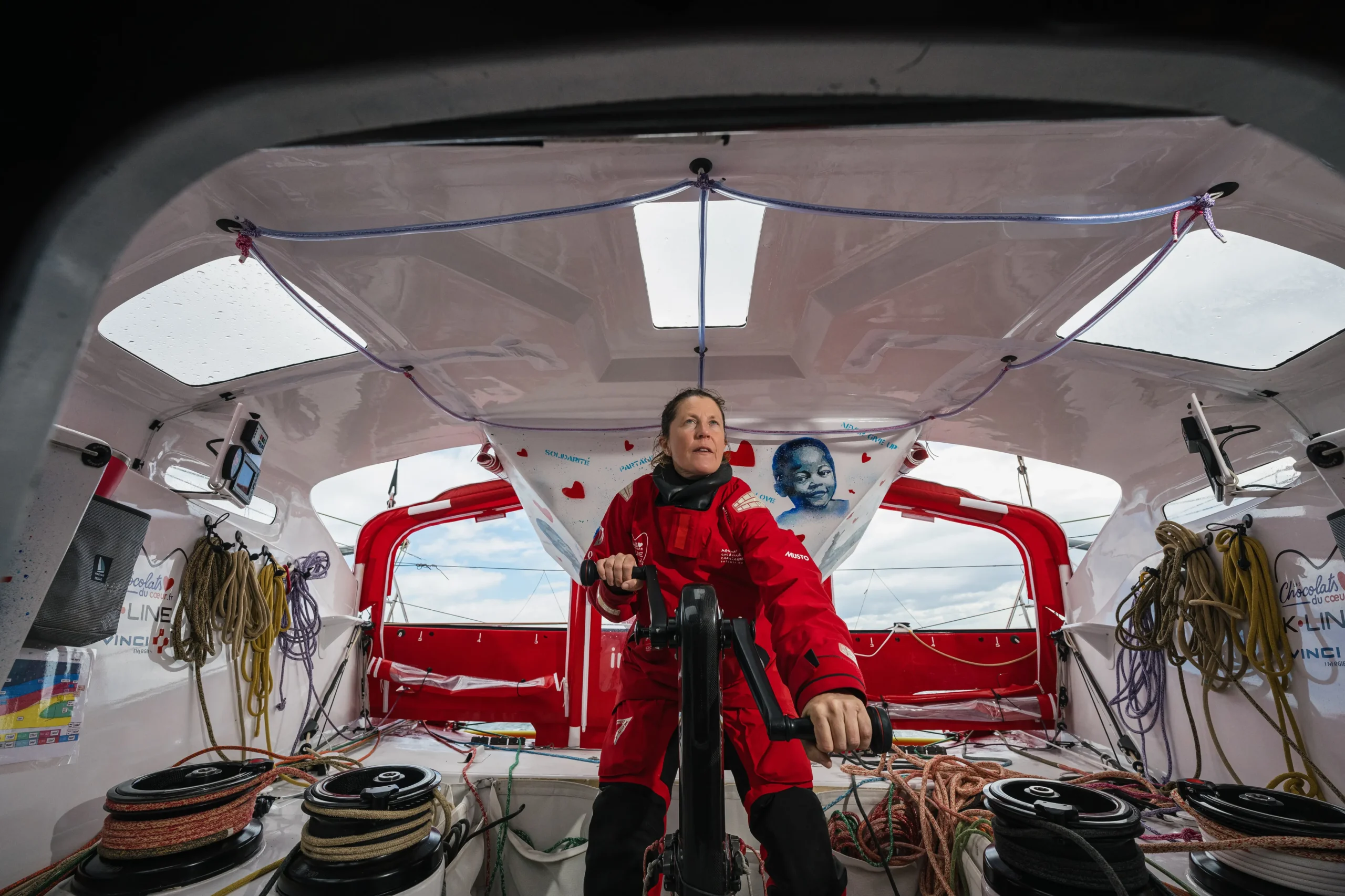
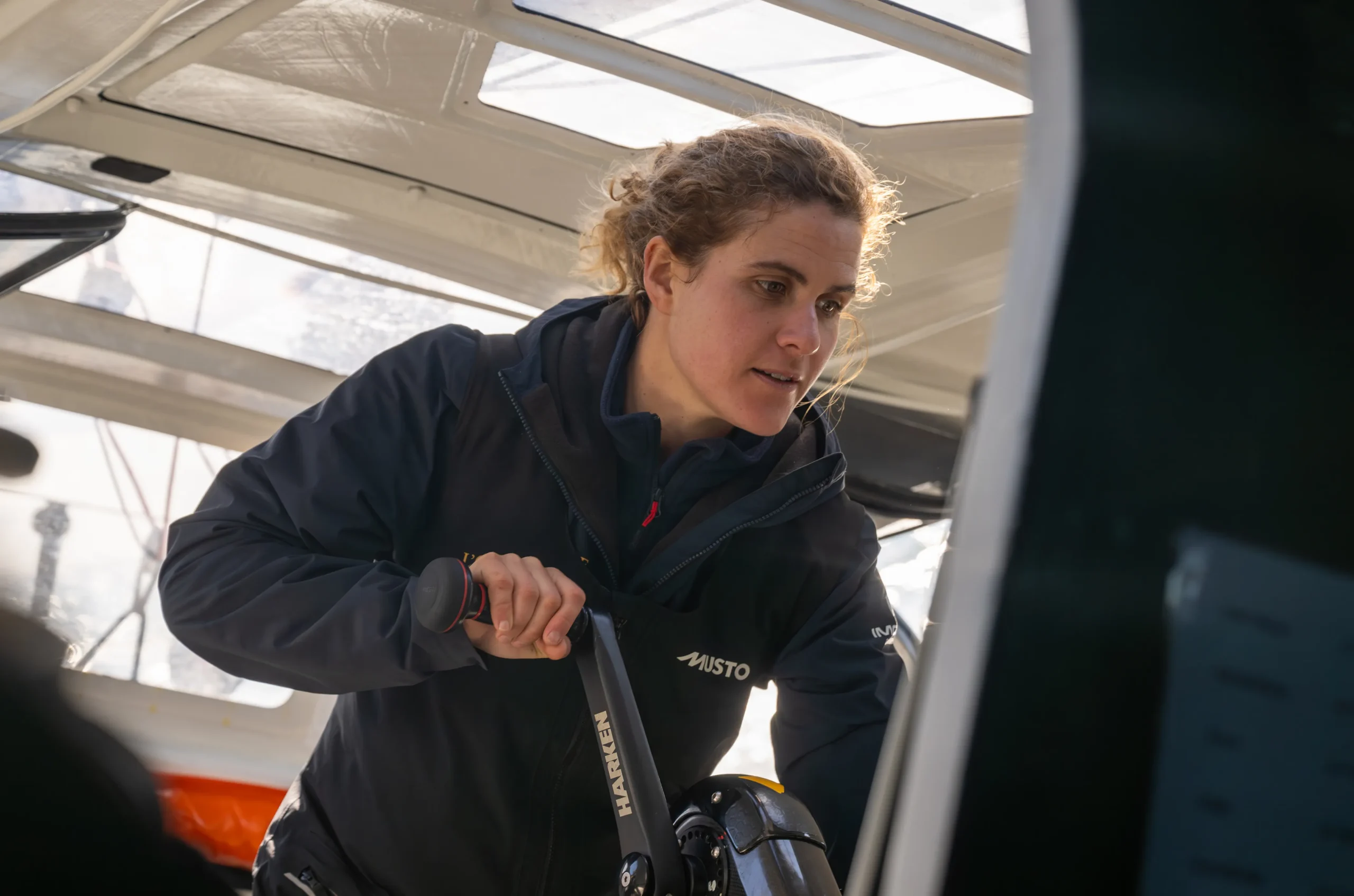
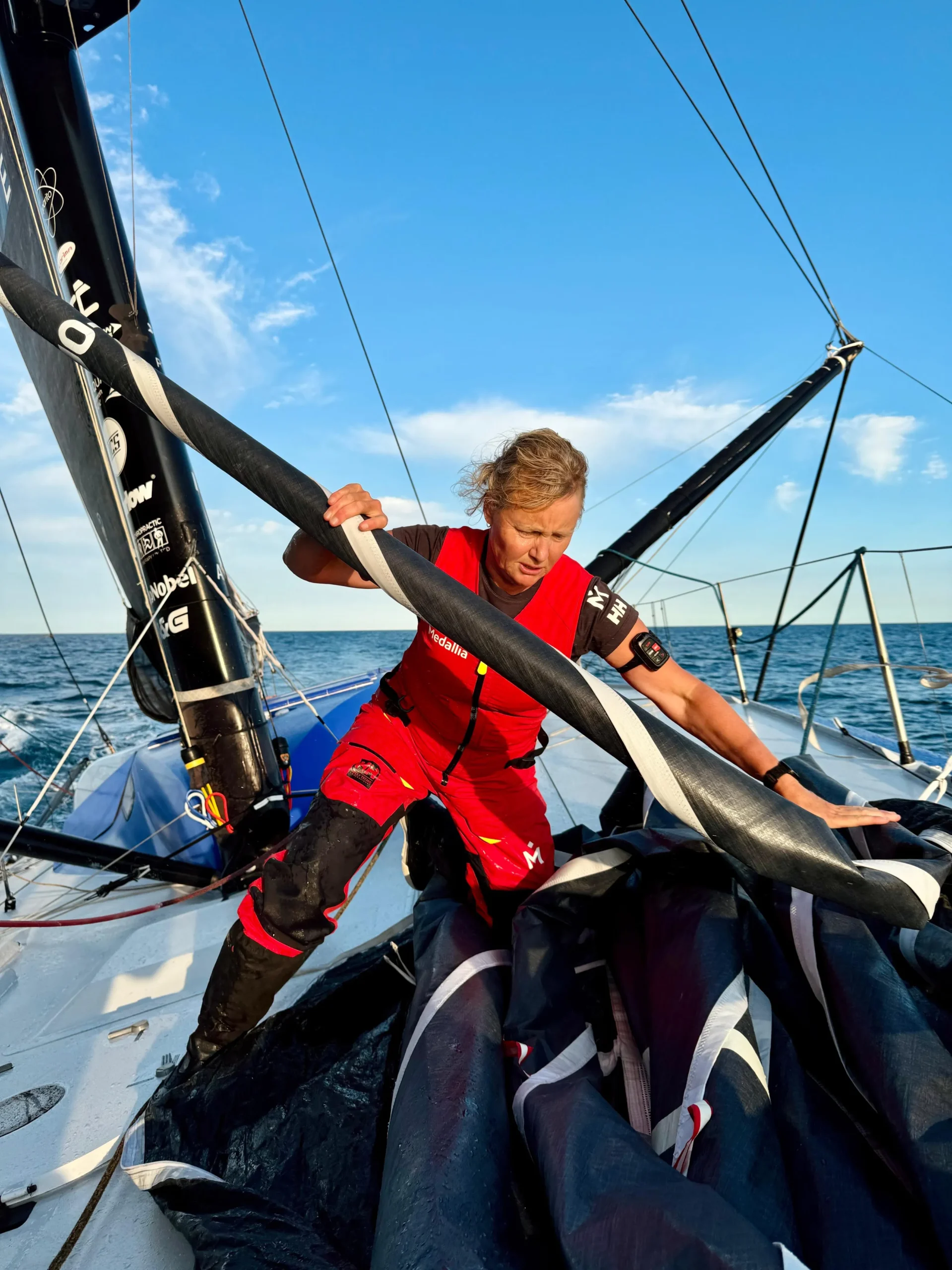
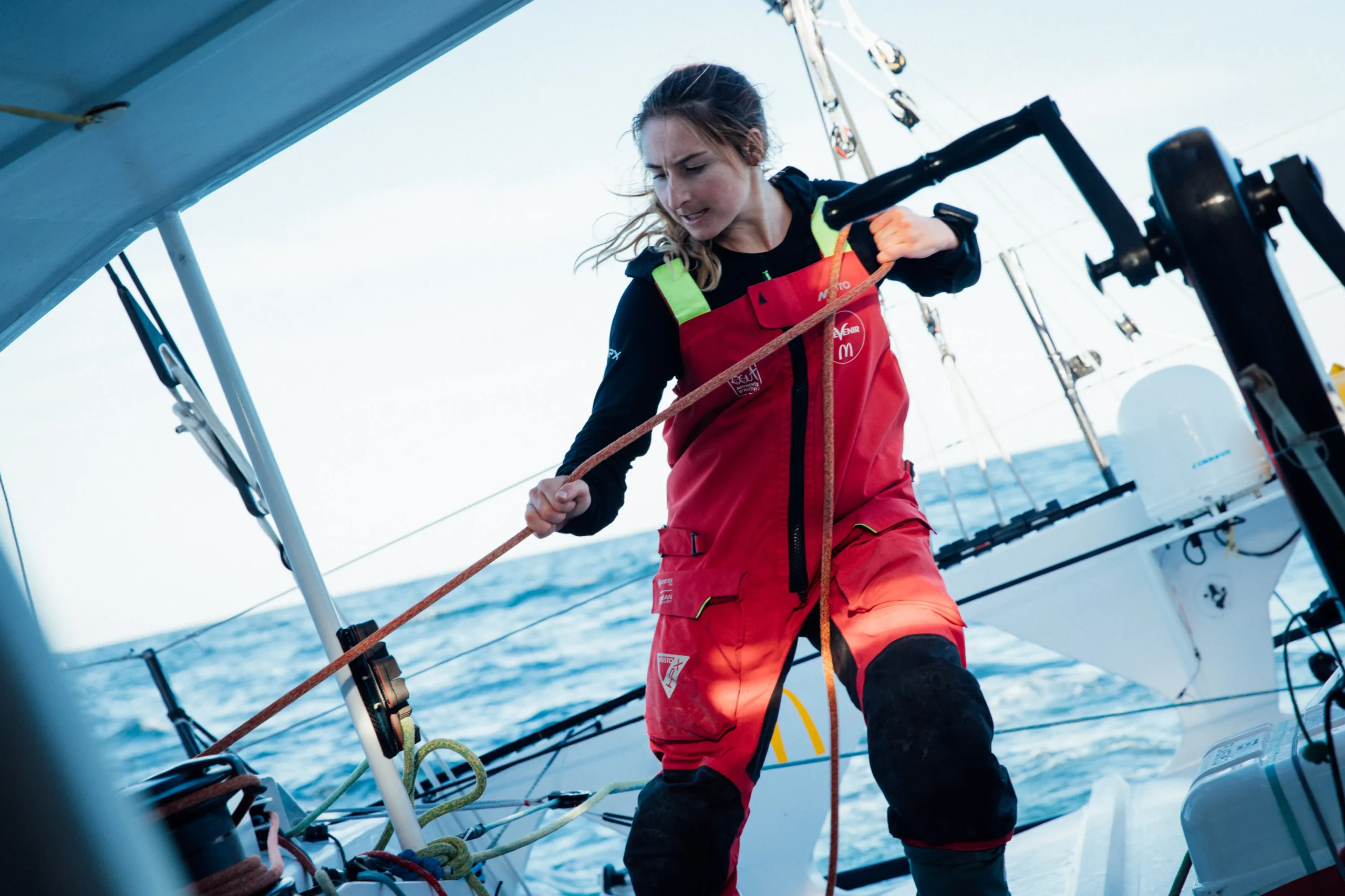
So there are physical differences, but it’s far from inevitable. Women generally have less muscle mass than men. In a sport like sailing, this can be seen as a direct hindrance to performance. However, Anne Beaudart, sports trainer to several Vendée Globe skippers near Lorient, explains that while women are no more at ease on the boat than men, they do have “a different way of managing effort, they have more endurance”. As Justine Mettraux’s indoor coach, she uses her example to show that consistency and good preparation during the winter are factors for success, as is fatigue management. That’s why Anne Beaudart does exactly the same preparation during the winter for men and women. Some will develop more endurance than strength. Aurore Kerr, sailor and former structural engineer at Alinghi Red Bull Racing, insists that “good physical preparation, training and the right equipment can erase this physical difference”.
Technology for performance
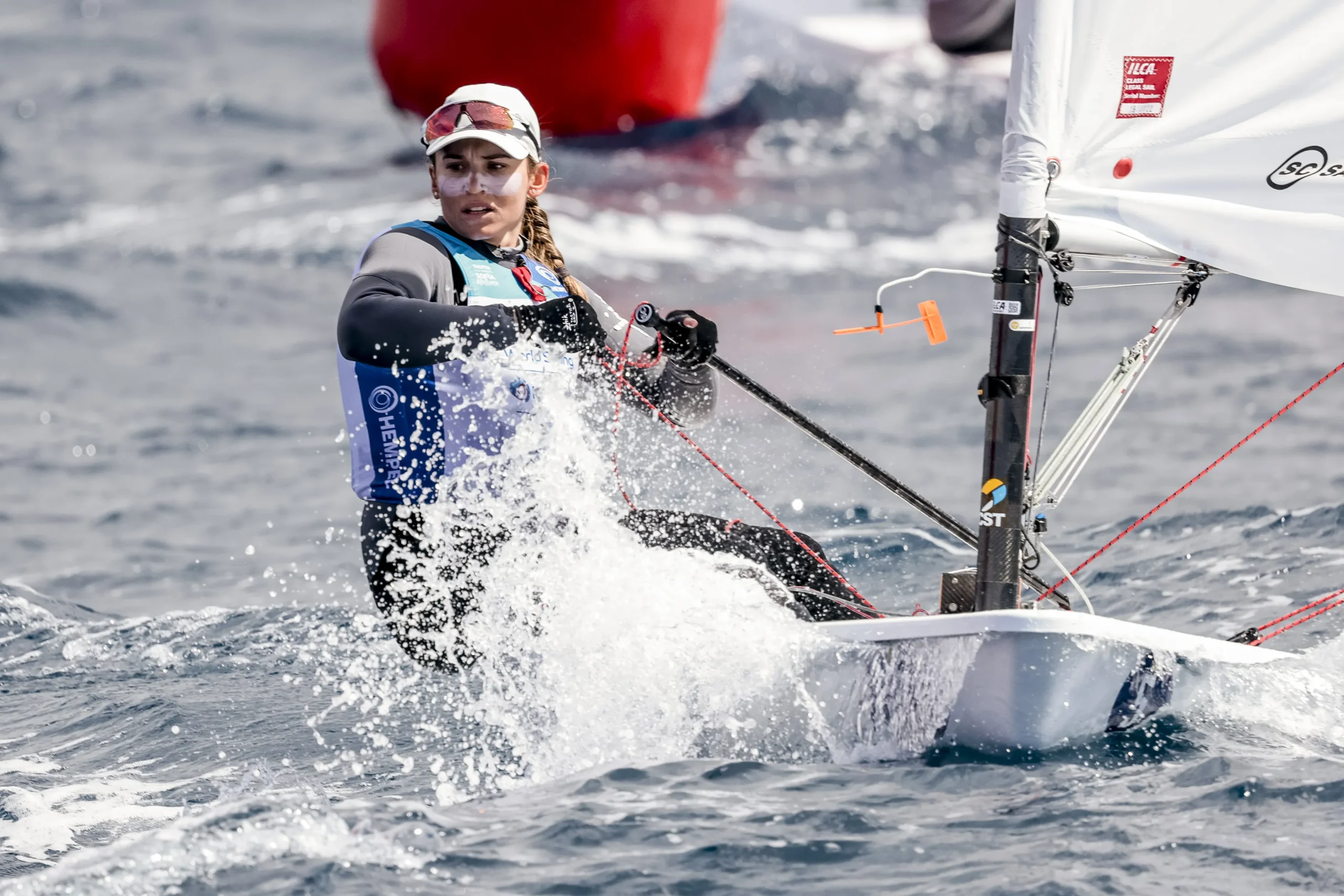
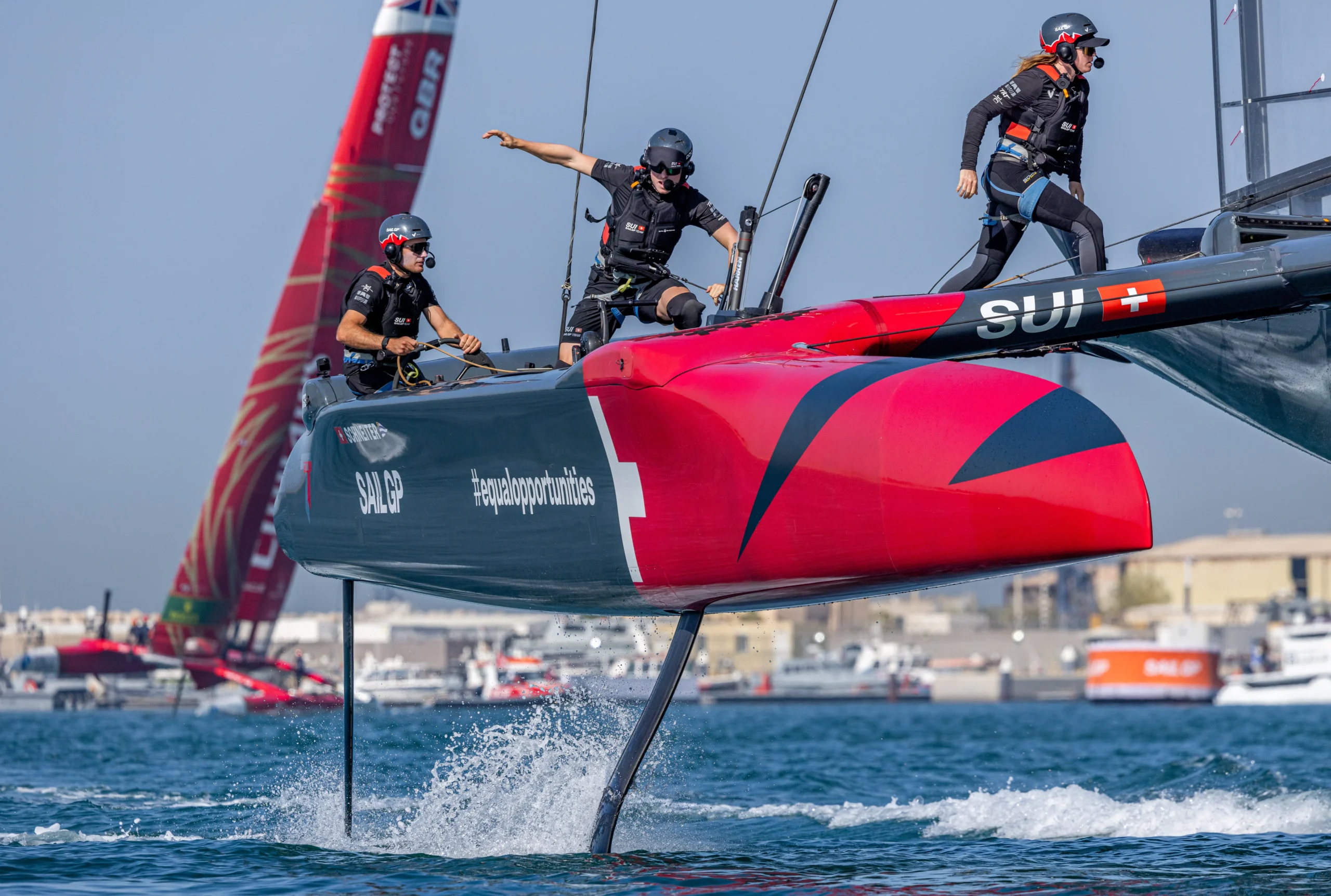
Technological evolution is constantly improving performance. Some women sailors also decide to reduce any strength deficit by adaptations such as winches, the size of the coffee grinder, matossage or even the multiplication of pulleys. The choice of boat and the type of regatta also play a part in the differences between men and women. In the Olympic context, Nathalie Brugger points out that the importance of equipment and mechanics depends on the category chosen. Physical preparation remains essential. “Physical fitness plays a key role in certain categories, such as Laser and Nacra 17. The same applies on our lakes, in D35 and TF35. The skipper of the Swiss boat at the last Women’s America’s Cup also acknowledges that the AC40 showed that other qualities can be more important: “only team cohesion, the technical aspect specific to the support and tactics were among the key points of performance.”
Yes, there are some regattas where the boats are all the same, the one-designs, where modifications are highly regulated. For example, on today’s Figaro circuit, these are third-generation Beneteau Figaros, and the rules governing their measurement meticulously regulate any possible transformation. If we were to classify boats, we could distinguish one-designs such as the Figaro 3, J/70, Laser or 49er, where only maneuvers and strategy are supposed to make the difference. Considering that everyone starts with the same physical strength, men and women alike. Conversely, there are “open” gauges where anything not expressly forbidden, limited or imposed by the rules is permitted. IMOCA, Class40 and Mini 6.50 proto or Ultim are among these, and allow for significant technical optimization. The skipper’s budget plays an essential role here. As a result, the more the boat moves away from the one-design concept, the less the starting physical strength counts, and the more the women sailors are able to find their way around, creating a level playing field.
A single starting line
Mixed crews often complement each other well, but they also raise the question of where each person fits in. Nathalie Brugger, Swiss Olympic sailor, confides that there are still obstacles linked to preconceived ideas, explaining that “a weakness encountered by women sometimes comes from prejudice. Women have to prove their abilities before they can take on a task of responsibility”. While physical strength is a factor in performance, strategy and reflexes are just as decisive. Choices have to be made when planning the race to minimize maneuvers. Anticipation
is not an option. Aurore Kerr adds that “the evolution of equipment makes sailing more accessible to women by “breaking the barrier of brute physical strength”.
In recent years, the evolution of boats has been meteoric. Each new ocean race beats the records of previous years. There are many different types of support and racing modes, and women may be disadvantaged in some cases, but know how to assert themselves in others. The challenge is no longer simply to prove that women can sail at the same level as men, but to recognize that they build performance differently. Brute strength has often been a selection criterion, but today the evolution of supports, equipment and training is reshuffling the cards. It’s no longer just a question of power, but of strategy, precision and adaptation. The sea has become a veritable playground for all.
Added management: menstruation
Women sailors, like all sportswomen, also have to perform despite their menstrual periods. During training, “they can adapt to their cycle to optimize their preparation”, explains Anne Beaudart. However, regatta dates are fixed and round-the-world ocean races inevitably mean that sailors have to have their periods on board. Laure Jacolot, the doctor on the last Vendée Globe, explains that this is above all something to be prepared for in advance, so as to be as little restricted as possible. “For lack of hygiene and comfort, many opt for contraception, which takes away their period. Others take advice but prefer to keep them.” With fatigue, constant movement and food, there is a change in hormones, but the pill still remains effective. Another less talked-about topic is premenstrual syndromes, a time sometimes more complicated than menstruation because sleep and energy are impacted. Laure Jacolot points out that another problem women need to be aware of is urinary tract infections, “because going to the bathroom quickly becomes complicated. Women tend to drink less and are prone to these discomforts”.