

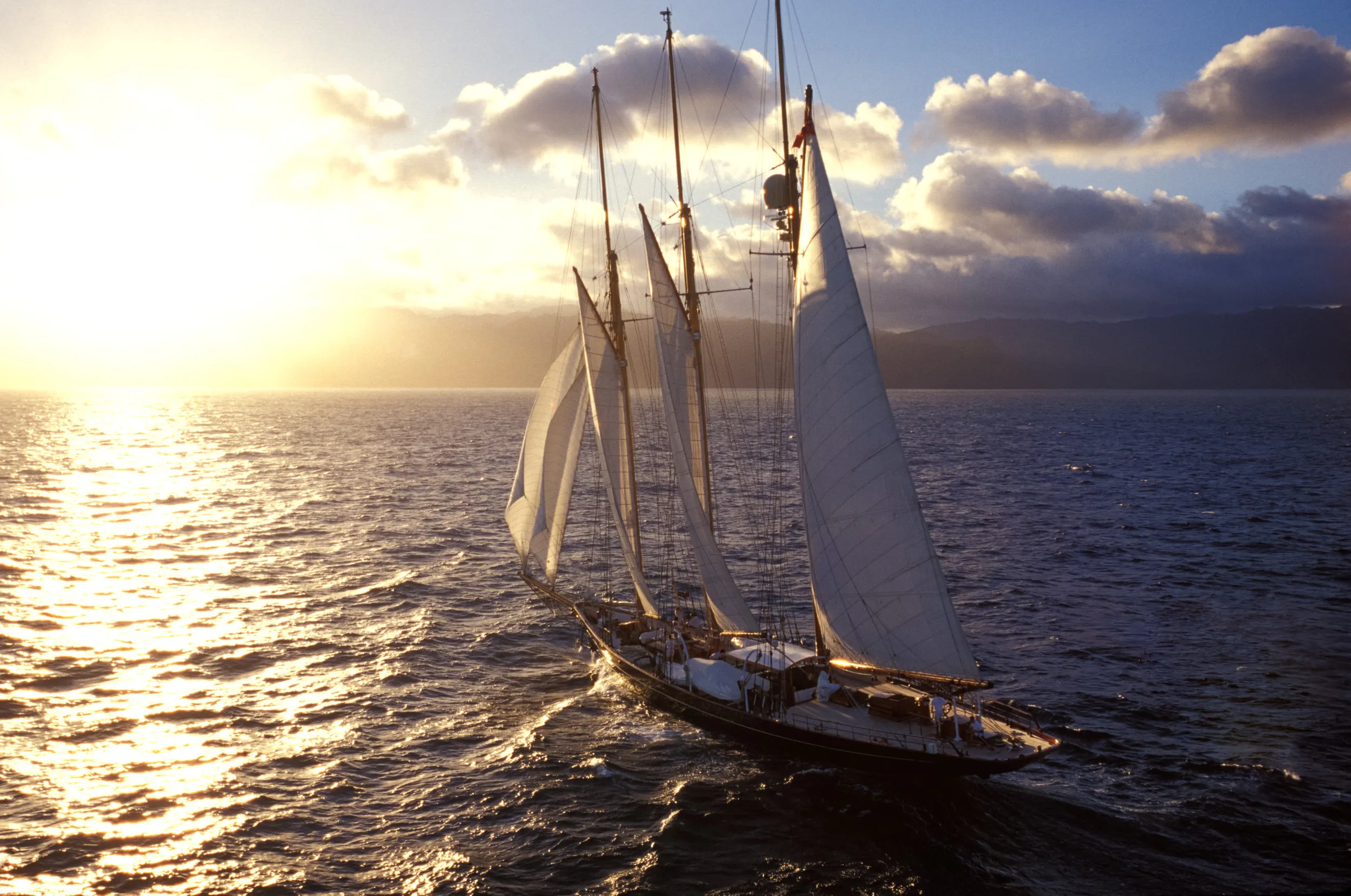
French Polynesia
French Polynesia, spread over an area the size of Europe (excluding Russia), is over 90% ocean and lagoon. The omnipresence of water has made this vast aquatic continent the Holy Grail of oceanic travel since the islands were first discovered by Europeans. A destination with an age-old seafaring culture that has become a modern yachting paradise.
French Polynesia is an overseas collectivity (collectivité d’outre-mer – COM) attached to France, comprising some 4,200 km 2 of land, scattered in 118 islands (76 of which are inhabited), in the middle of a marine area of almost 5 million km2 . It lies in the heart of the South Pacific, approximately the same distance from Australia (about 6,500 km to the west), Chile and California, around the Tropic of Capricorn. Its main island, Tahiti, with its capital, Papeete, is almost 16,000 km from Paris. This political center administers five archipelagos, each distinguished by its own strong identity and culture, as well as by the variety of its natural structures and landscapes, illustrating the stages in the life of volcanic islands, from high islands to atolls.
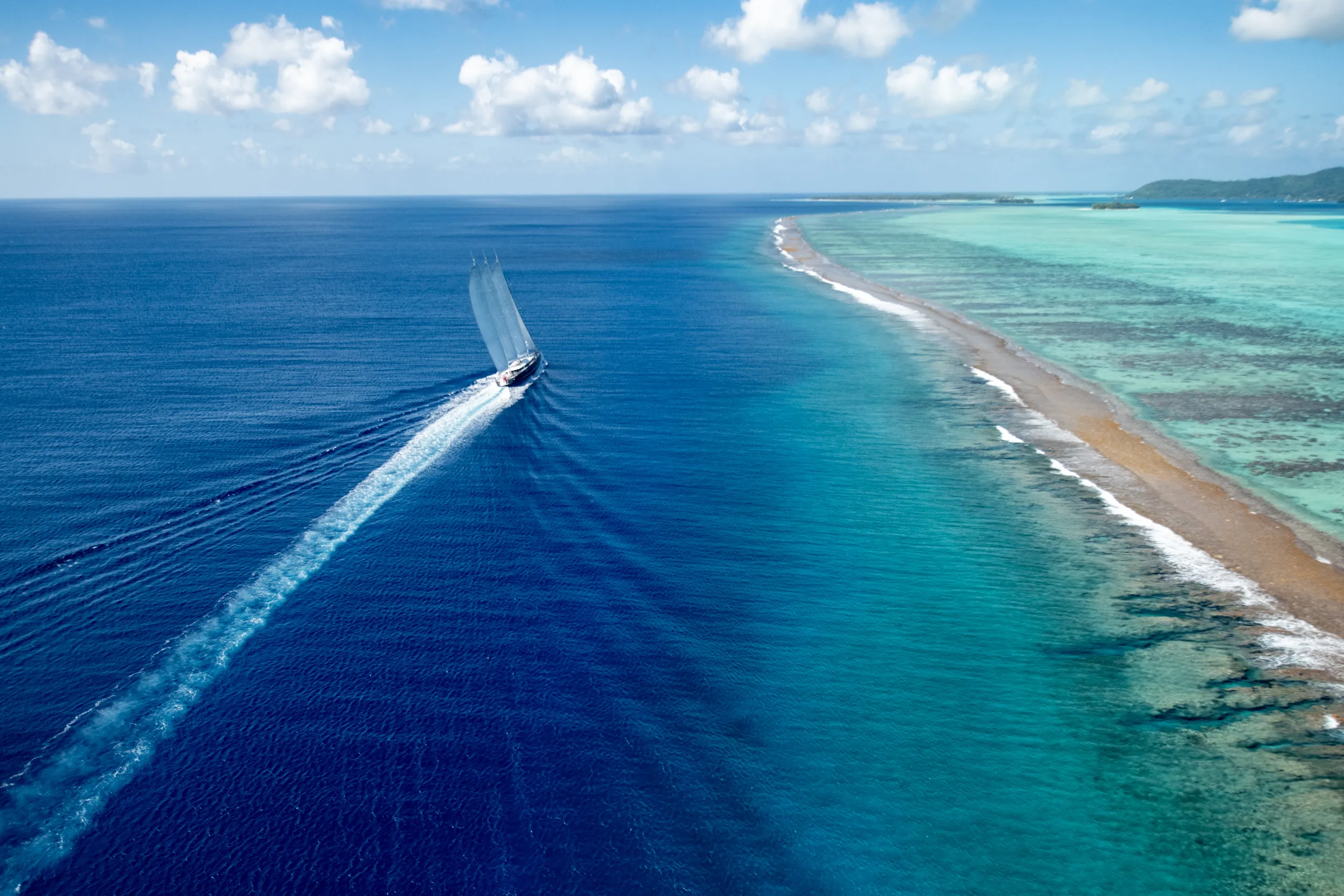
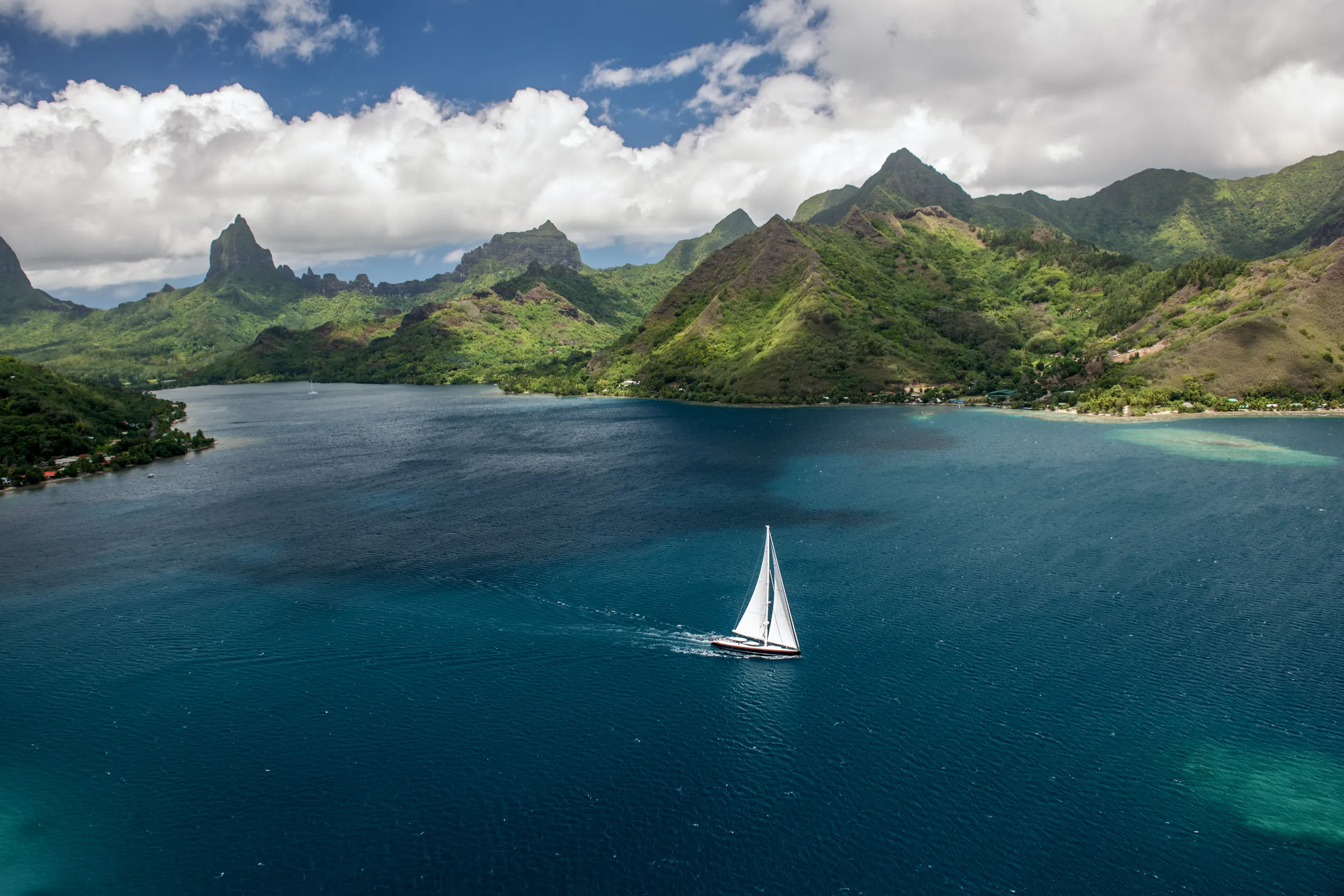
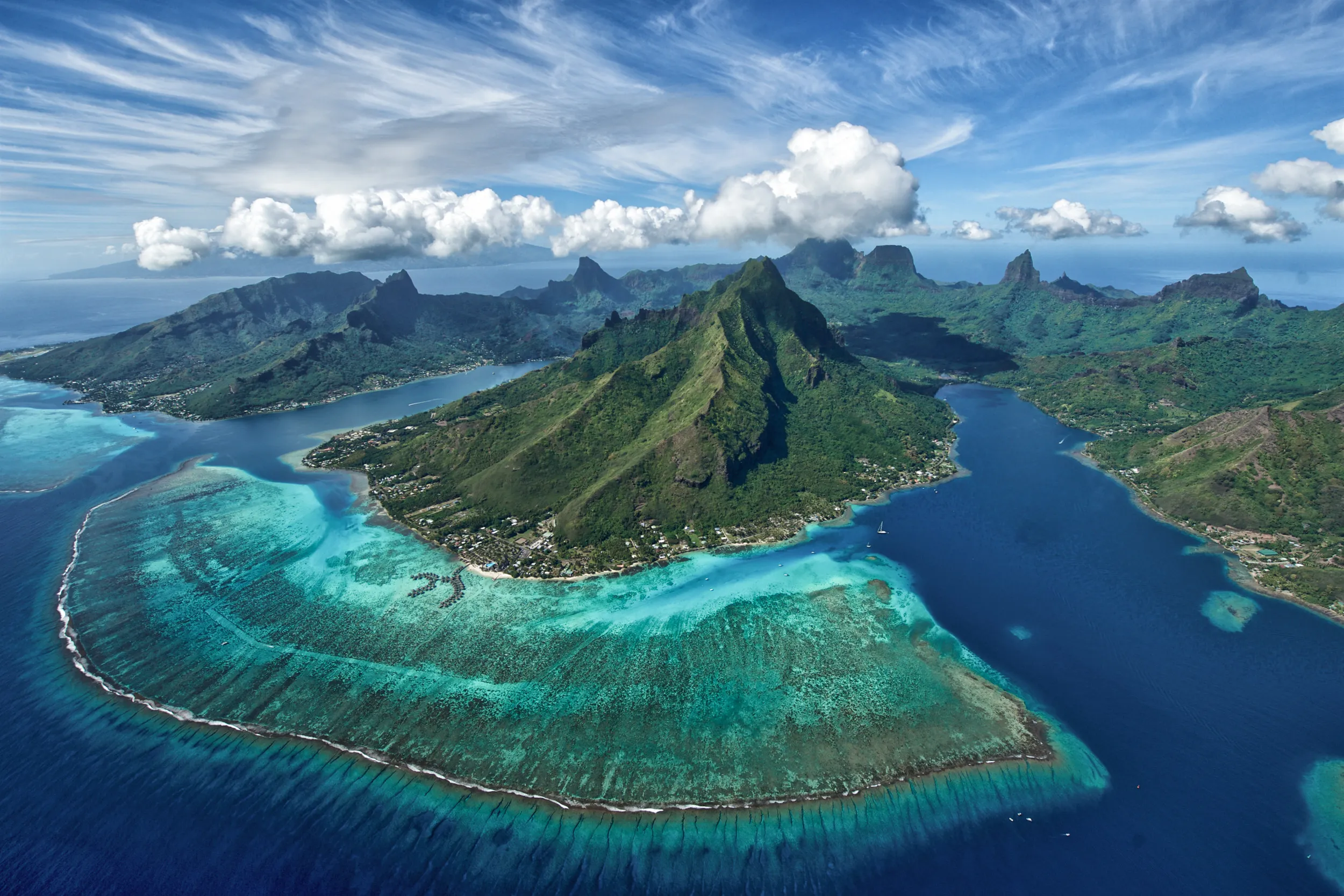
From north to south, we first encounter the mystical Marquesas Islands, the last refuge of Jacques Brel and Paul Gauguin. Then there are the Tuamotu, a chain of islands extended by the Gambier Islands, which stretch for almost 1,500 km from northwest to southeast of Tahiti, and the Leeward Islands, whose lagoons are the setting for the “Pearl of the Pacific”, Bora Bora, Taha’a, the “vanilla island”, or Raiatea, the sacred island long considered the cradle of Polynesian culture (the Leeward Islands, which together with the Windward Islands, the most important of which are Tahiti, Moorea and Tetiaroa, Marlon Brando’s atoll, make up the Society Islands). And finally, the Austral Islands.
Part of the Polynesian triangle
French Polynesia is just one “artificial” part of a much larger entity known as the Polynesian Triangle. This cultural area, defined by a common identity, includes Samoa, New Zealand, Rapa Nui (Easter Island) and Hawaii. These are destinations whose populations all consider themselves to be cousins, connected by a common genetic, linguistic and cultural origin, but also presenting major disparities that make their respective cultures highly specific and original. Indeed, we know that the dispersal of the first Polynesians, undertaken in successive waves over several centuries, was accompanied by significant cultural differentiation. As part of this founding organic movement, French Polynesia itself developed eminently singular societies and cultures in its scattered archipelagos.
Unique cultural diversity and richness
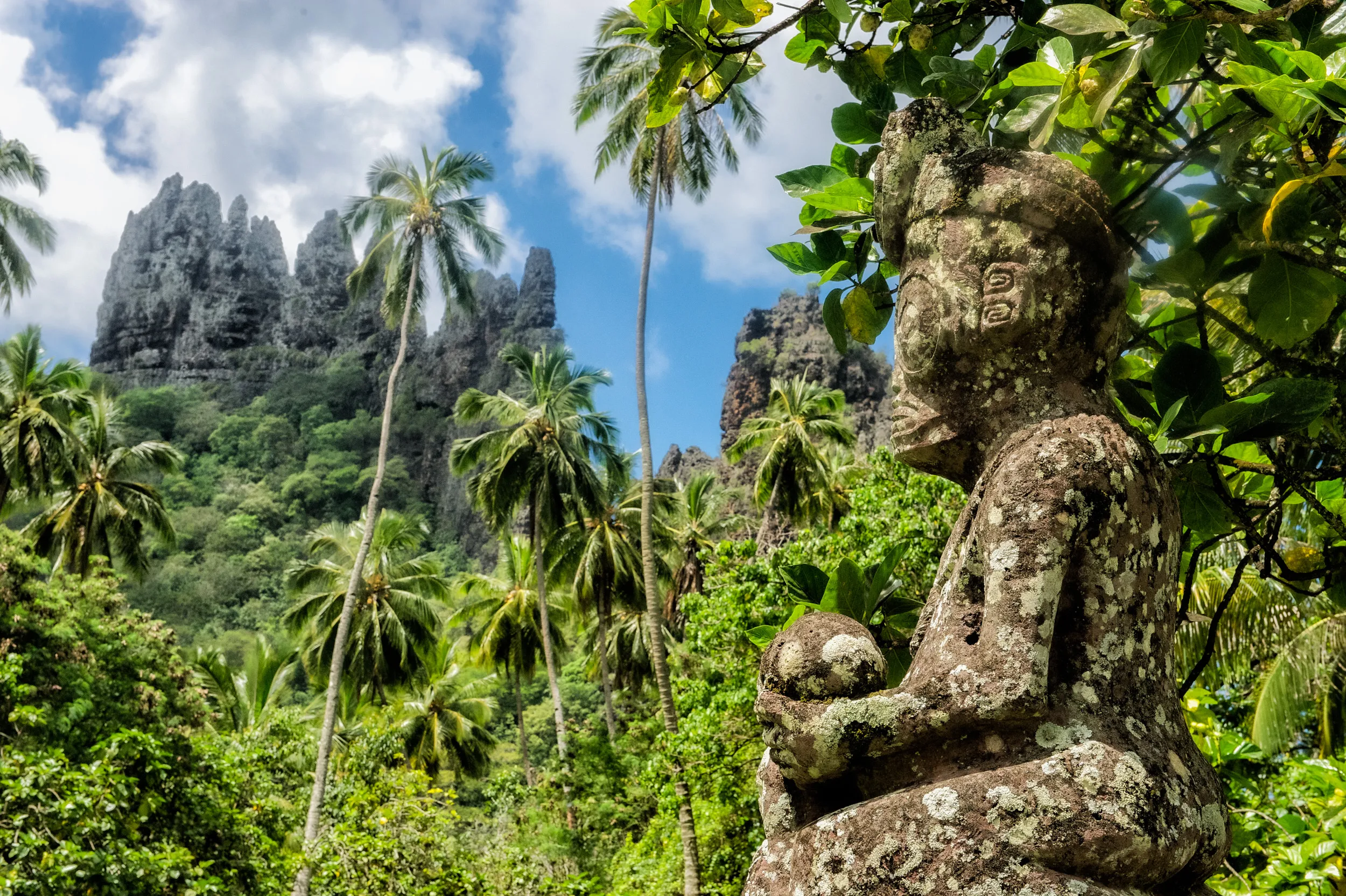
To understand these disparities, we also need to remember that before the arrival of Europeans, Tahiti was anything but a homogenous entity. Although explorers of various nationalities had been visiting the island since the 17th century (Magellan discovered Puka Puka in the Tuamotu Islands in 1521), Tahiti was not officially discovered by the British explorer Samuel Wallis until 1767, followed by Bougainville in 1768 and Cook the following year. After contact, this area, home to numerous native clans and “kingdoms”, was for a long time the scene of intense rivalry between the great European colonial empires. It was only after long decades of struggles for influence between these successive colonizers that the geographical entity of “French Polynesia” took on its definitive form. Attached to France since 1880, the whole of its current territory only became part of the French Colonial Empire in 1901, bringing together lands with unique cultures, which are still the source of its richness today.
The ocean as a link, history as a compass
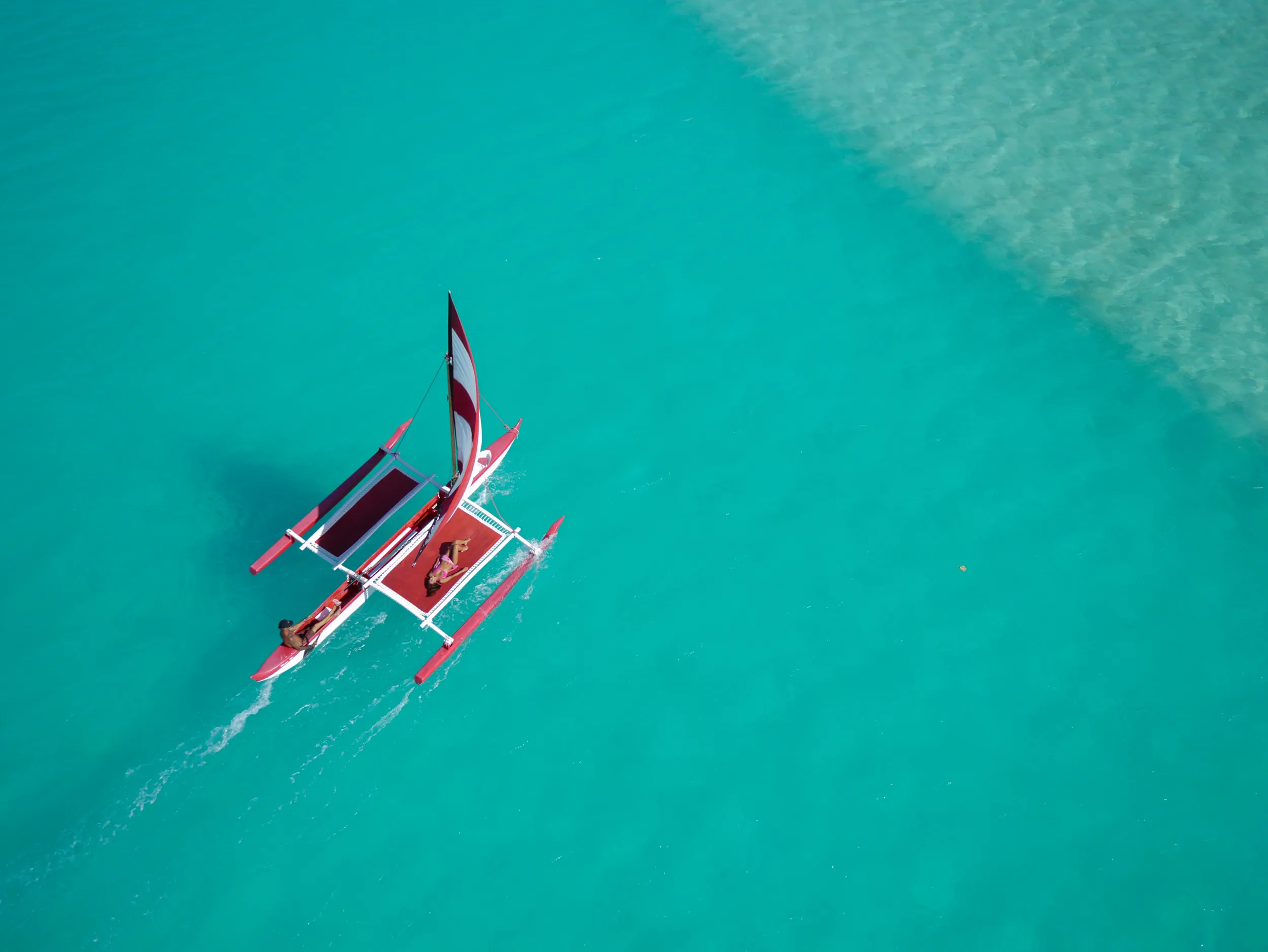
Its remoteness from Western capitals has also enabled it to preserve a cultural heritage built entirely around the ocean. While specialist debate continues to rage around theories explaining the origins and chronology of the great migrations that populated these islands, it is certain that these paradisiacal lands were first inhabited by populations of formidable sailors. Aboard double-hulled pirogues, without modern instruments, guided only by the stars, the birds, the clouds and the swell, these daring navigators
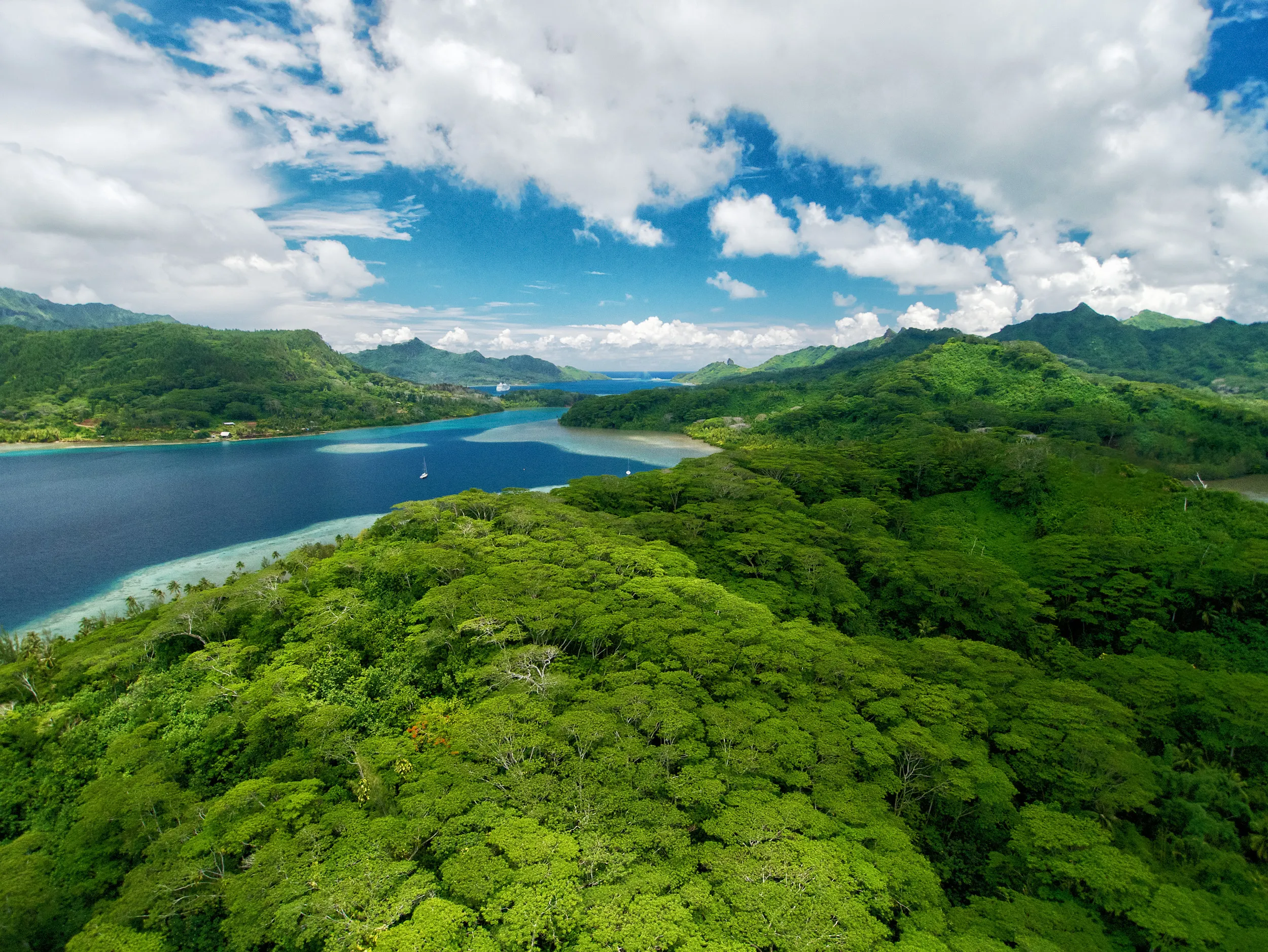
over millions of km 2 , wove an incredible network of small human communities, linked in a continuum, that still fascinates today’s lovers of adventure and distant horizons. It’s a precious heritage that modern Polynesians have managed to keep intact, while taking advantage of modern infrastructures and technologies to continue their dialogue with the ocean as never before. Today, this unrivalled breeding ground offers sailing enthusiasts a playground like no other, embroidered with a mosaic of turquoise lagoons, high mountains with lush vegetation and navigable passes.
Exceptional marine life
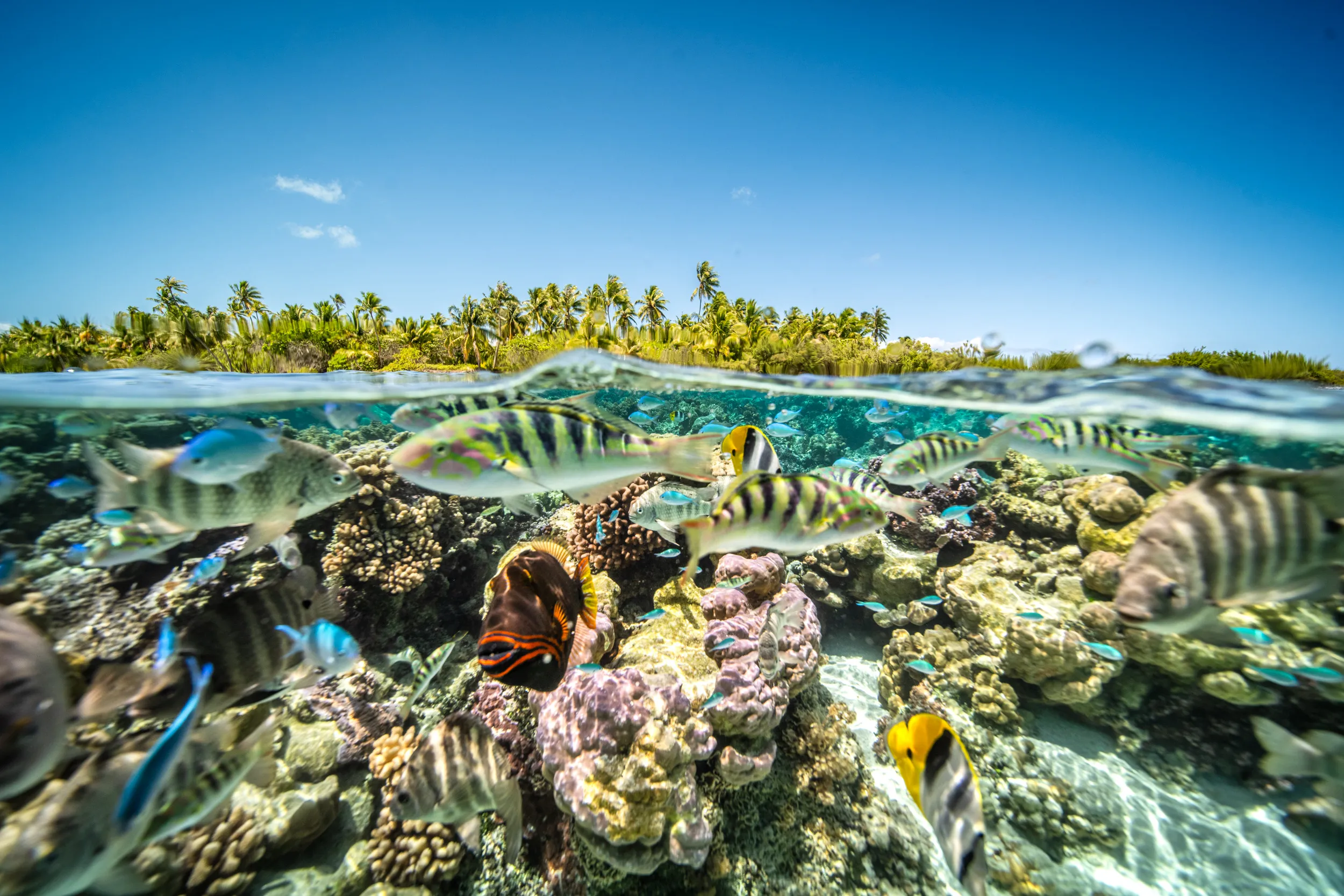
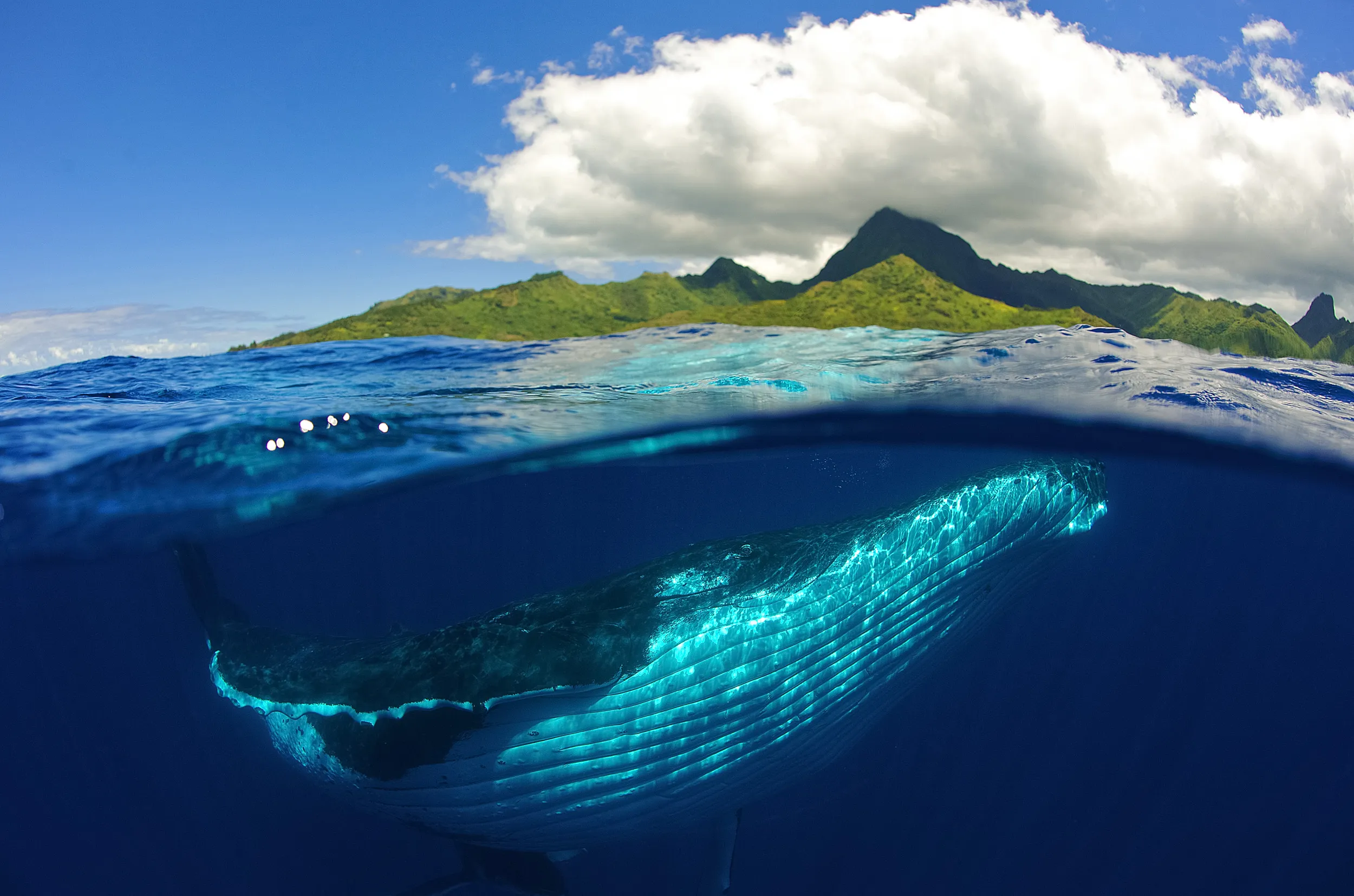
Among the natural treasures that make Polynesia a sailing paradise, marine animals are by no means the least, as Polynesian waters are home to some twenty-three species of cetacean, including dolphins, whales, orcas and porpoises. You can meet the beaked whale, the Minke whale and even the extraordinary blue whale, the empress of the oceans. But it’s the humpback whale that has captured the lion’s share of the hearts of tourists and locals alike, as its behavior makes it easily visible and observable close to the coast every year between June and November, the period when it comes to breed in Polynesia’s warm waters.
Sailing conditions and dream islands
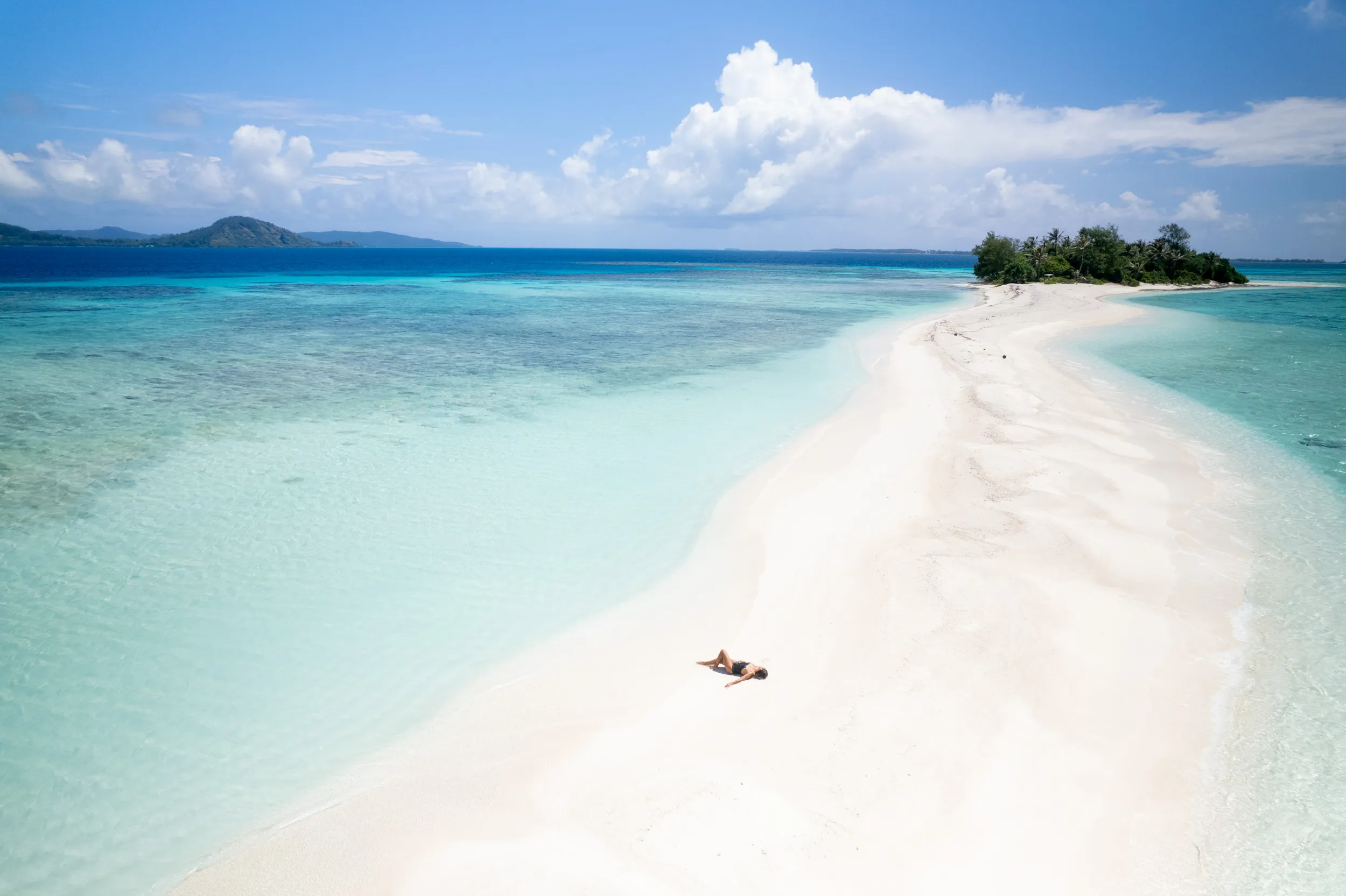
Sailing in French Polynesia is one of the best ways to discover this vibrant territory in the heart of the South Pacific, far from the crowds and conventional itineraries. What’s more, it also offers particularly pleasant sailing thanks to its temperate tropical climate. The south-easterly trade winds blow from May to October, during the dry season, ideal for a serene cruise. The rainy season (November to April) calls for greater caution, with the occasional, albeit moderate, risk of cyclones. Sailors often prefer the Society archipelago, which includes Tahiti, Moorea, Raiatea, Huahine, Taha’a and, of course, Bora Bora. These islands are close to each other (less than 50 nautical miles), making for safe sailing on sight or between lagoons, depending on your level of experience. The lagoons also offer swell-sheltered sailing, with numerous mooring possibilities. Whether you’re a novice yachtsman or a more experienced sailor, the Society Archipelago unfolds a space as enchanting as it is practicable, where each island becomes an unforgettable stopover. The must-see is perhaps Tupai, an uninhabited heart-shaped atoll attached to the commune of Bora Bora and considered the most romantic in the world, but requiring special dispensation for access. The main marinas and yacht clubs are located in Tahiti, Moorea, Bora Bora and Raiatea, but there are numerous moorings and some port facilities elsewhere, notably on Huahine and Taha’a. Considered the “nautical capital” of French Polynesia, Raiatea, which also has a well-connected domestic airport, is the ideal starting point for a cruise to the Leeward Islands. The island boasts the largest concentration of nautical services: shipyards, sailmakers, bunkering services, fuel stations and several sailboat rental bases. The Apooiti marina, close to Uturoa, is well equipped and secure. And the sheltered anchorage in front of the Taputapuātea marae, the spiritual center of the Territory, is particularly recommended for a soul-renewing stopover.
The jewels of the Society Archipelago
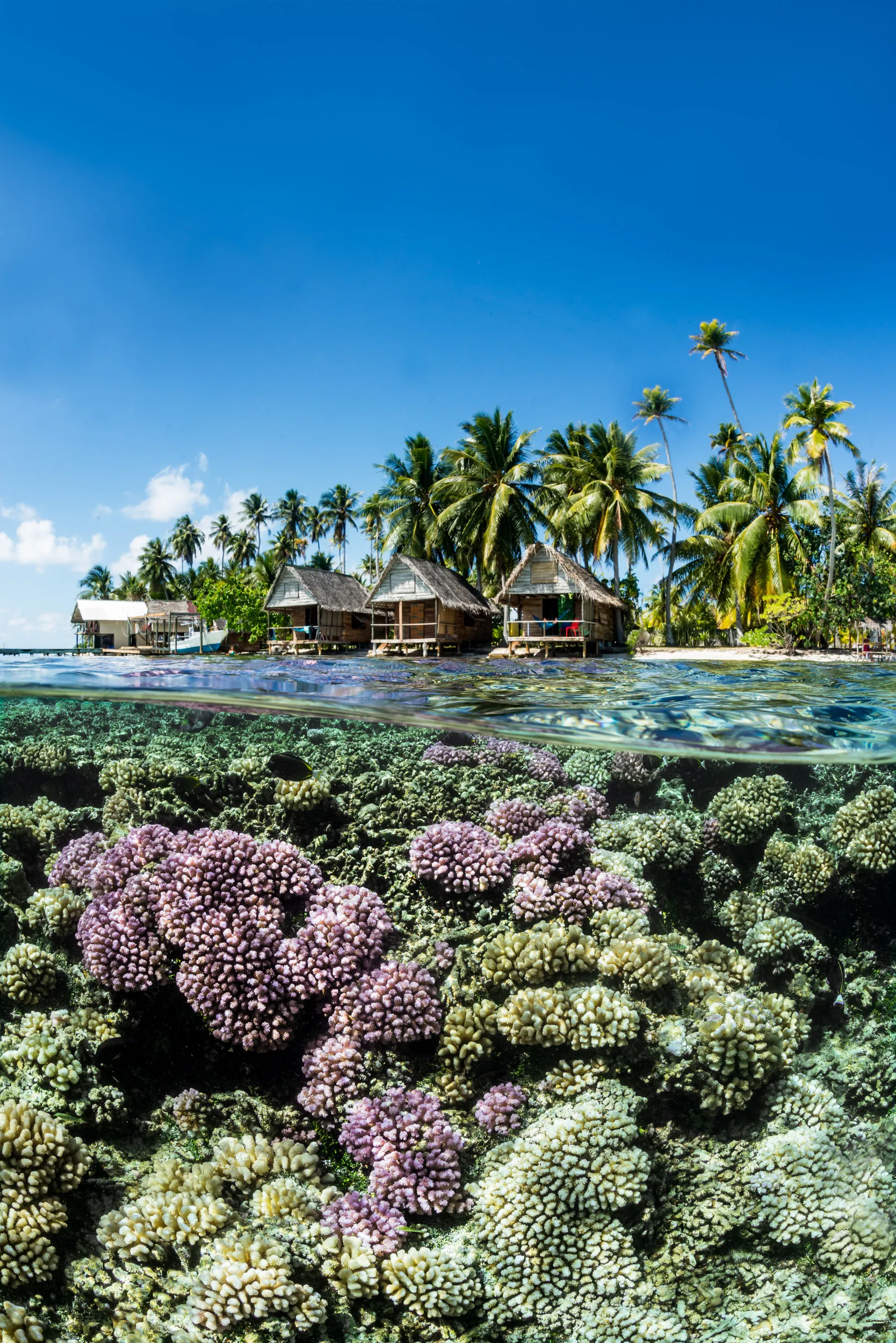
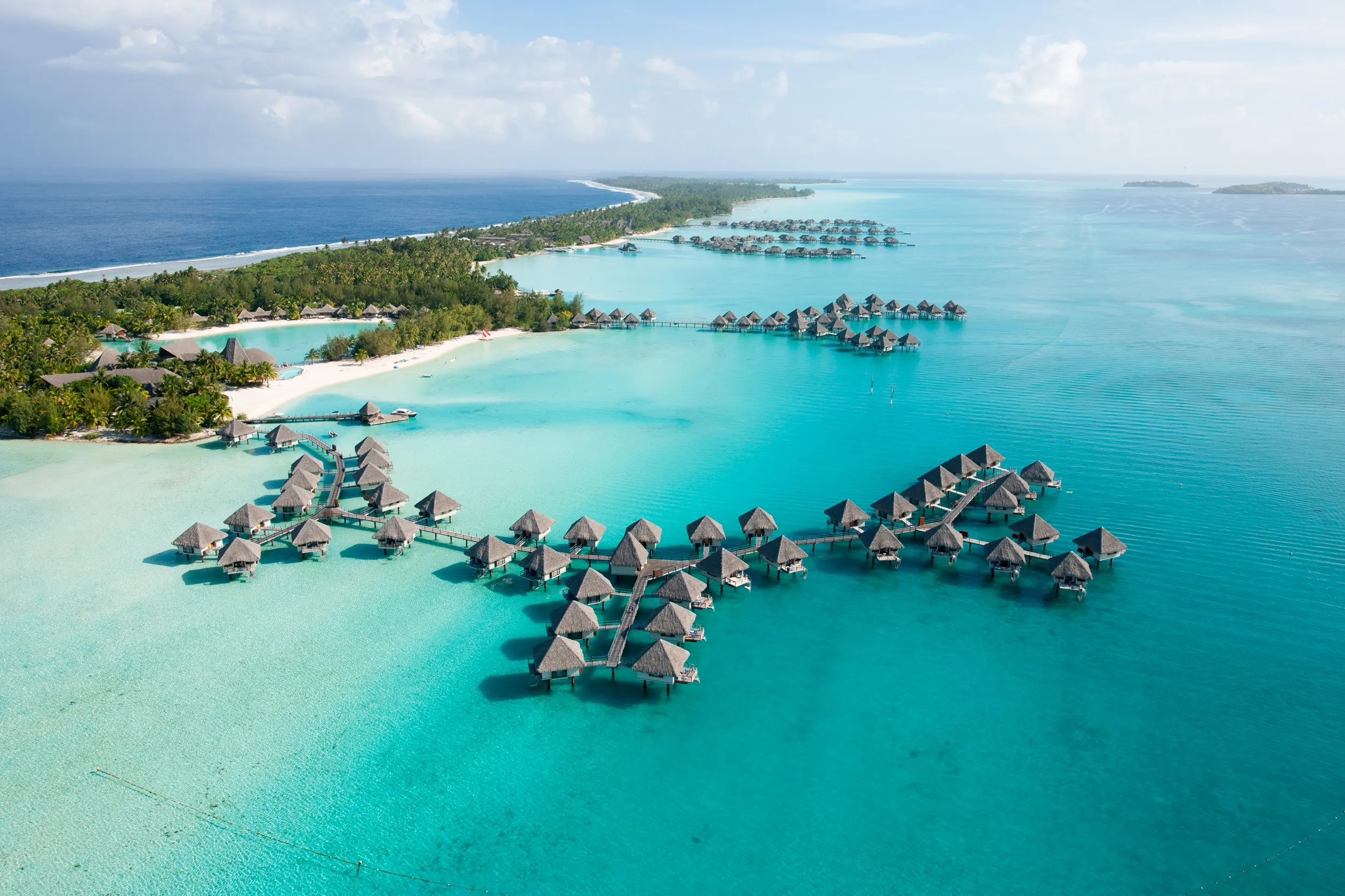
Another safe bet within easy reach is Bora Bora, the mythical jewel overlooked by Mount Otemanu. Several anchorages are available: in front of Vaitape (the main village), near the motu Toopua or on the east coast, opposite the luxurious stilt bungalows. However, precautions must be taken, as navigation inside the lagoon requires vigilance and good cartography due to the numerous coral reefs and narrow passes. GPS is useful, but paper charts remain essential. It’s also important to note that some areas are private or protected. As elsewhere, respecting access prohibitions is crucial to preserving the fragile lagoon ecosystem. Huahine, Taha’a and the other less-frequented islands are more discreet treasures, but with a host of attractions that will particularly appeal to sailors in search of authenticity. Huahine offers sumptuous anchorages such as Fare, while Taha’a, the twin island that shares its lagoon with Raiatea, has several quiet anchorages where you can moor near vanilla plantations or pearl farms. And last but not least, just 17 miles from Tahiti, sister island Moorea offers a haven of welcoming wilderness. Less developed than the capital island, it remains a favorite with yachtsmen for its spectacular anchorages. Its two large bays, Cook and Opunohu, promise safe shelter, even in strong winds. The latter is particularly peaceful and picturesque, surrounded by craggy peaks and lush vegetation.
No limits to exploration
Sailing in French Polynesia, in the Society Islands or in the heart of the other archipelagos, served by some twenty schooners and numerous cruise ships, is above all a sensory and deeply spiritual adventure. Each island has its own rhythm, its own traditions, its own unique landscapes shaped by the gods. But everywhere the same spirit breathes: that of welcome, respect for the ocean and a living ancestral memory, ready to resonate with anyone who will lend an ear…
Practical info
When to go?
The dry (and cooler) season extends from May to October. The wet (and warmer) season covers the rest of the year, with occasional but moderate cyclone risk.
How do I get there?
Unless you’re reaching French Polynesia by boat, the “classic” arrival is by plane at Tahiti-Faa’a international airport, served by several international airlines including Air France, Air Tahiti Nui and French Bee, which operate services several times a week from Paris or the USA.
Sail
Tides are low in French Polynesia, but currents can be powerful, especially in the passes. Beware also of the fury of the reefs on days of heavy swell. The existing passes are generally well marked, and the approaches, while requiring vigilance, are accessible with up-to-date charts and a reliable GPS.
The Heiva, the main event in the Polynesian cultural calendar
This traditional dance and song competition, created in 1881 and one of the oldest in the world, is the highlight of the Polynesian cultural calendar. Held in July, it gives rise to numerous other events (traditional sports competitions, sailing pirogue regattas, craft demonstrations, etc.) every year from late June to mid-August.
Preparing your sailing in Polynesia
- Formalities: Entry by sea is possible from Papeete (Tahiti), Raiatea or Bora Bora. It is compulsory to report to the maritime police and customs upon arrival.
- Mapping: GPS is reliable but no substitute for vigilance, and passes are generally well marked. The Shom (Groupement océanographique du Pacifique) catalog includes 81 maps of the French Polynesia area. Its data can be consulted on the portal: data.shom.fr. “Moana, guide de la mer”, for Tahiti and her islands, is also published and updated every year since 1996 by Créaprint. Available in hard copy, past editions are also available in digital format until 2023-24 on creaprint.pf
- Provisioning: Tahiti, Raiatea, Moorea and Bora Bora are easy to provision. For smaller islands, it’s best to bring provisions and spare parts.
- Environment: it’s crucial to respect the reefs, use moorings where available and limit discards. Many areas are classified for their biodiversity.
- Internet and communications: local SIM cards from Vini or Vodafone provide decent coverage, especially around the larger islands.
- Safety: in case of emergency, use the VHF radio, channel 16, to be put directly in touch with JRCC, which coordinates search and rescue at sea, or other nearby boats.
To organize a customized trip and/or navigation