
Launched this winter, Sir Lindsay Owen-Jones’s new 100-footer is no longer powered by an internal combustion engine. This spring, Skippers tested the Maxi monohull off Saint-Tropez, in a decidedly electric atmosphere.
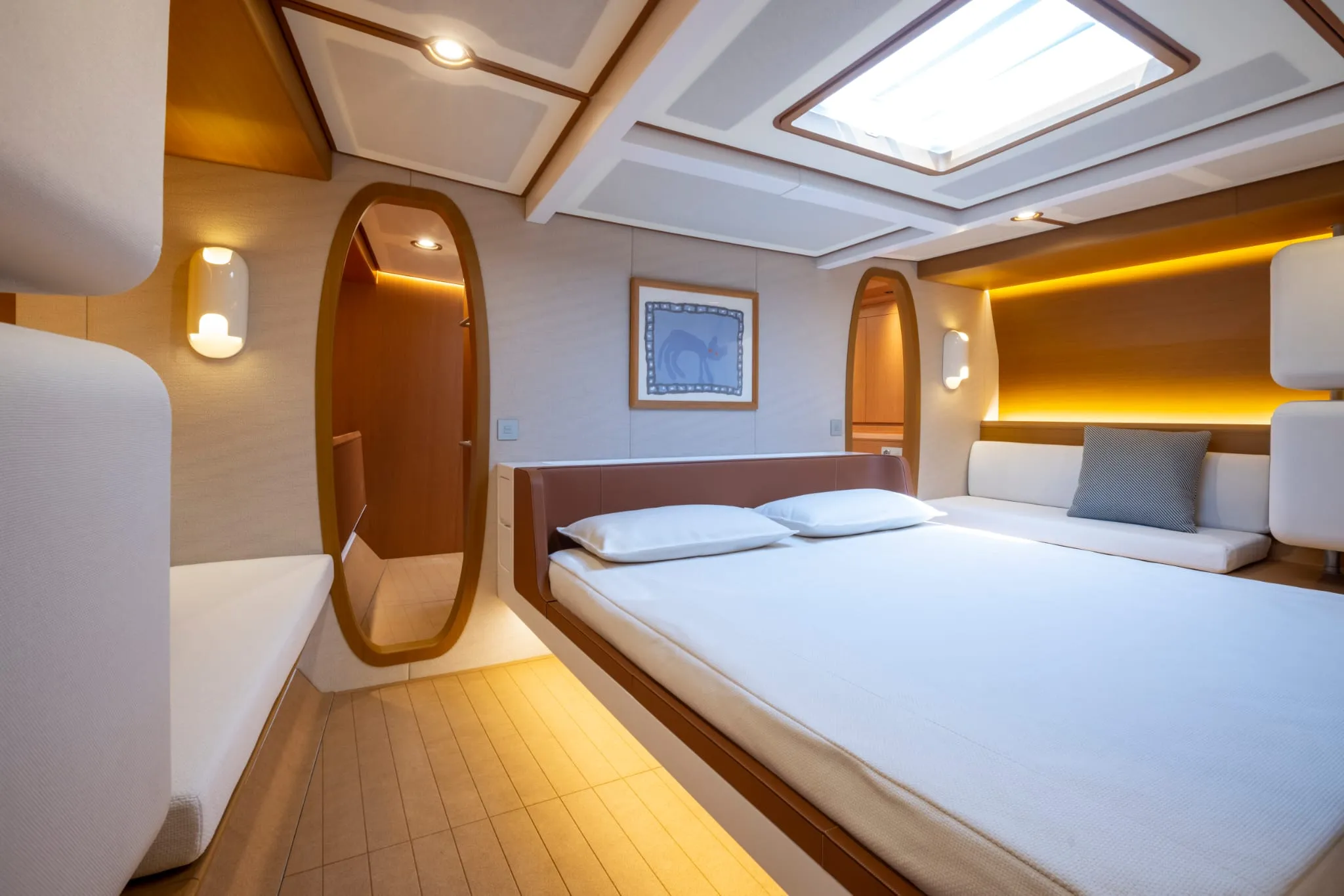
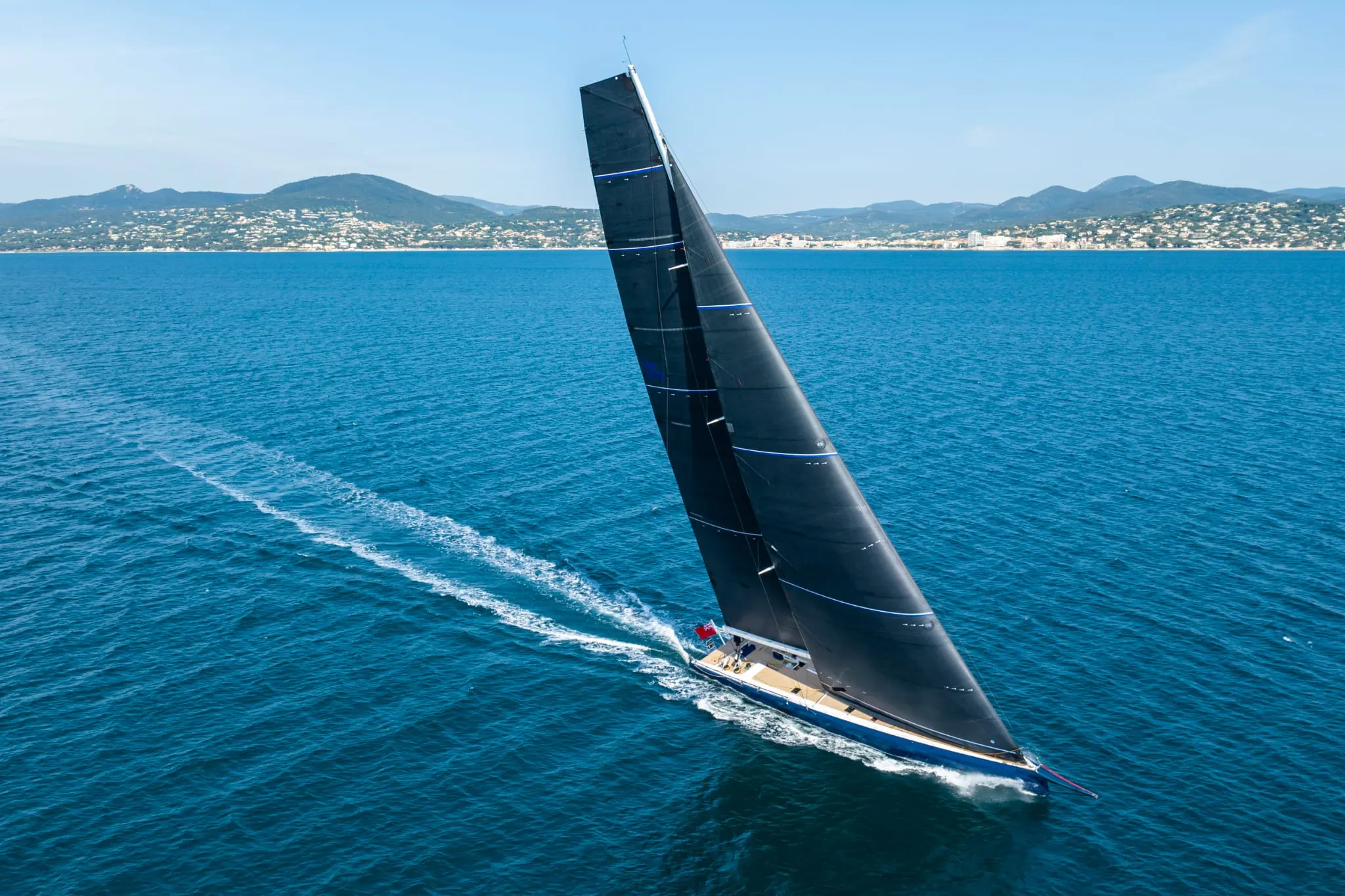
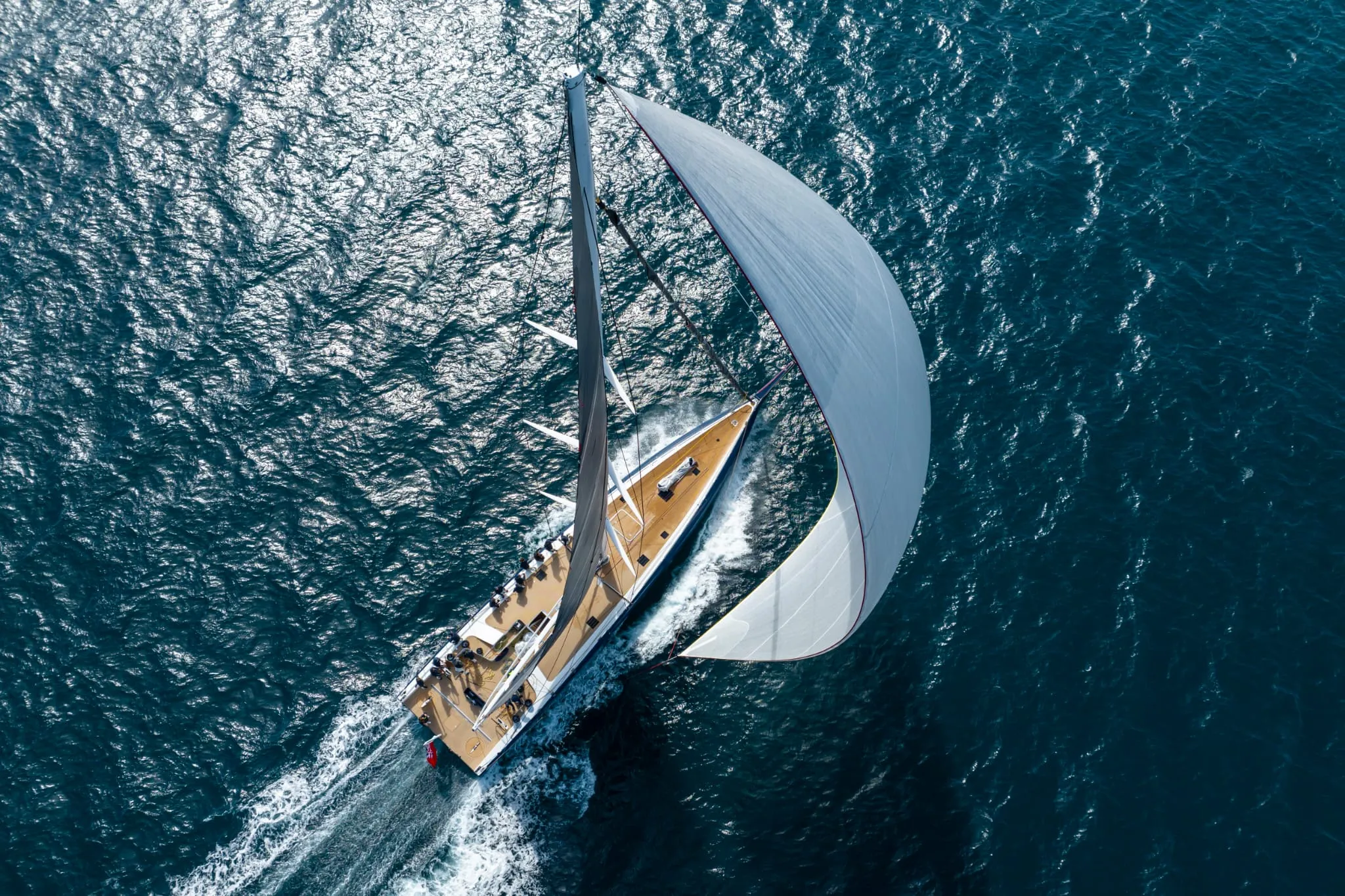
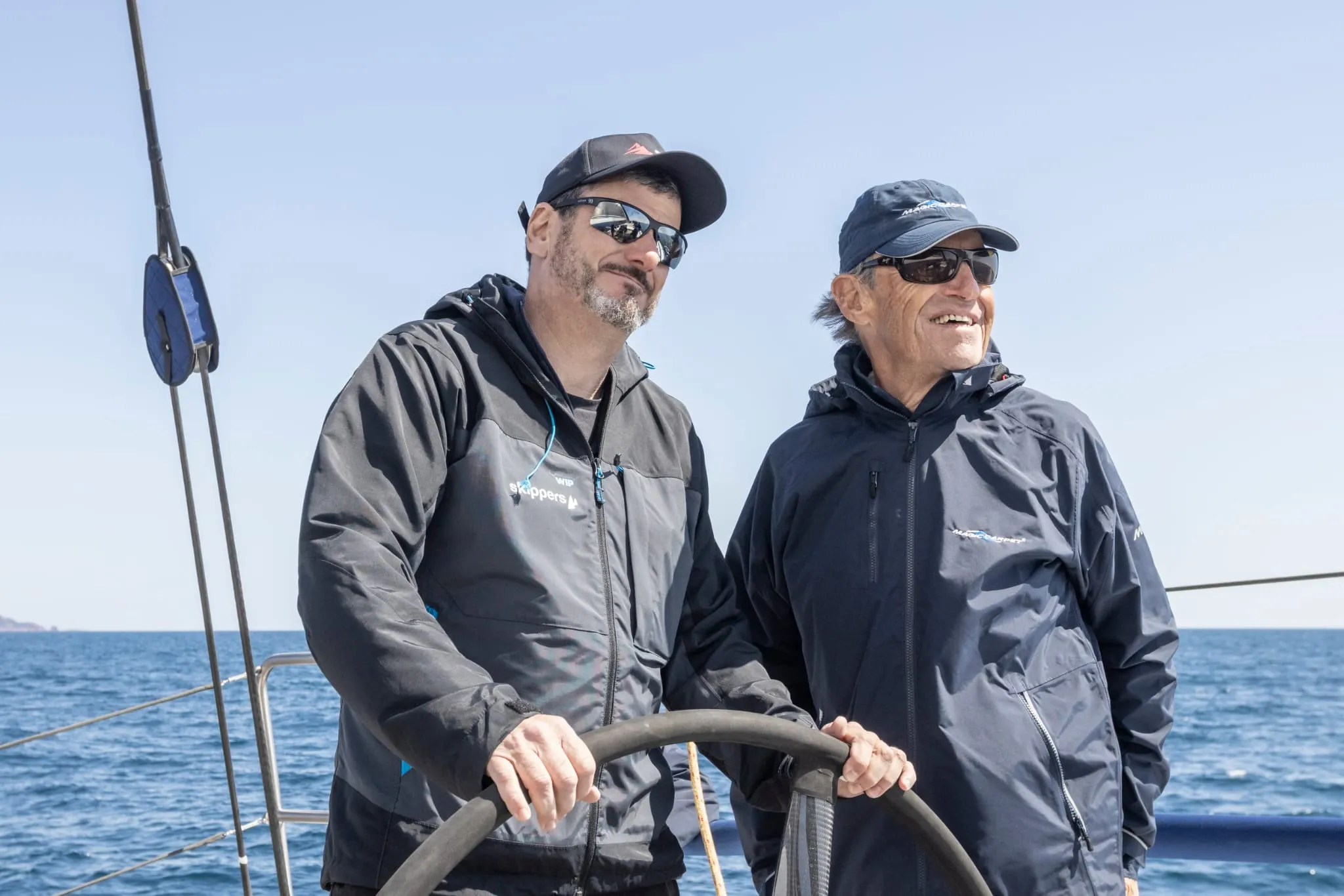
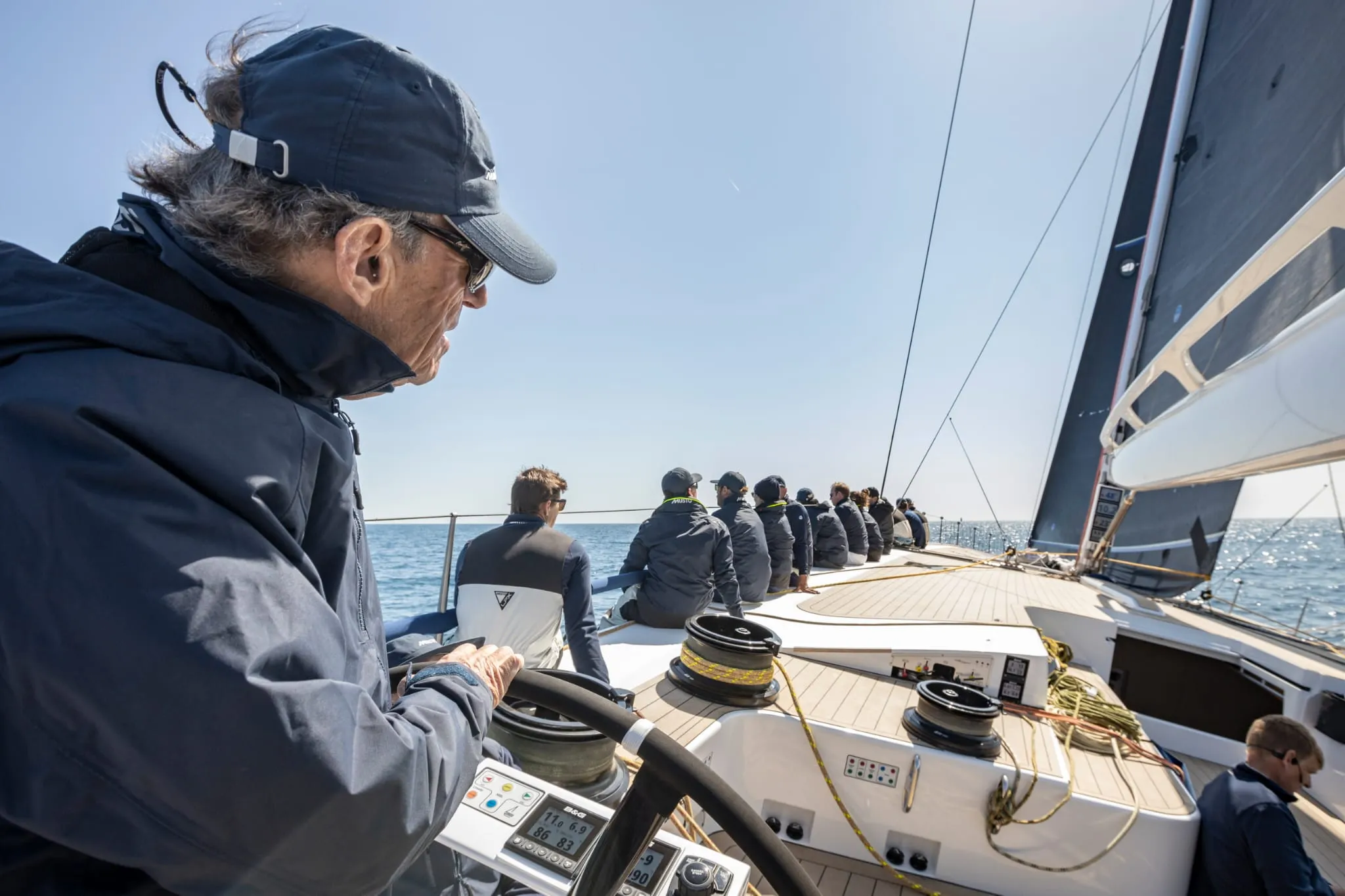
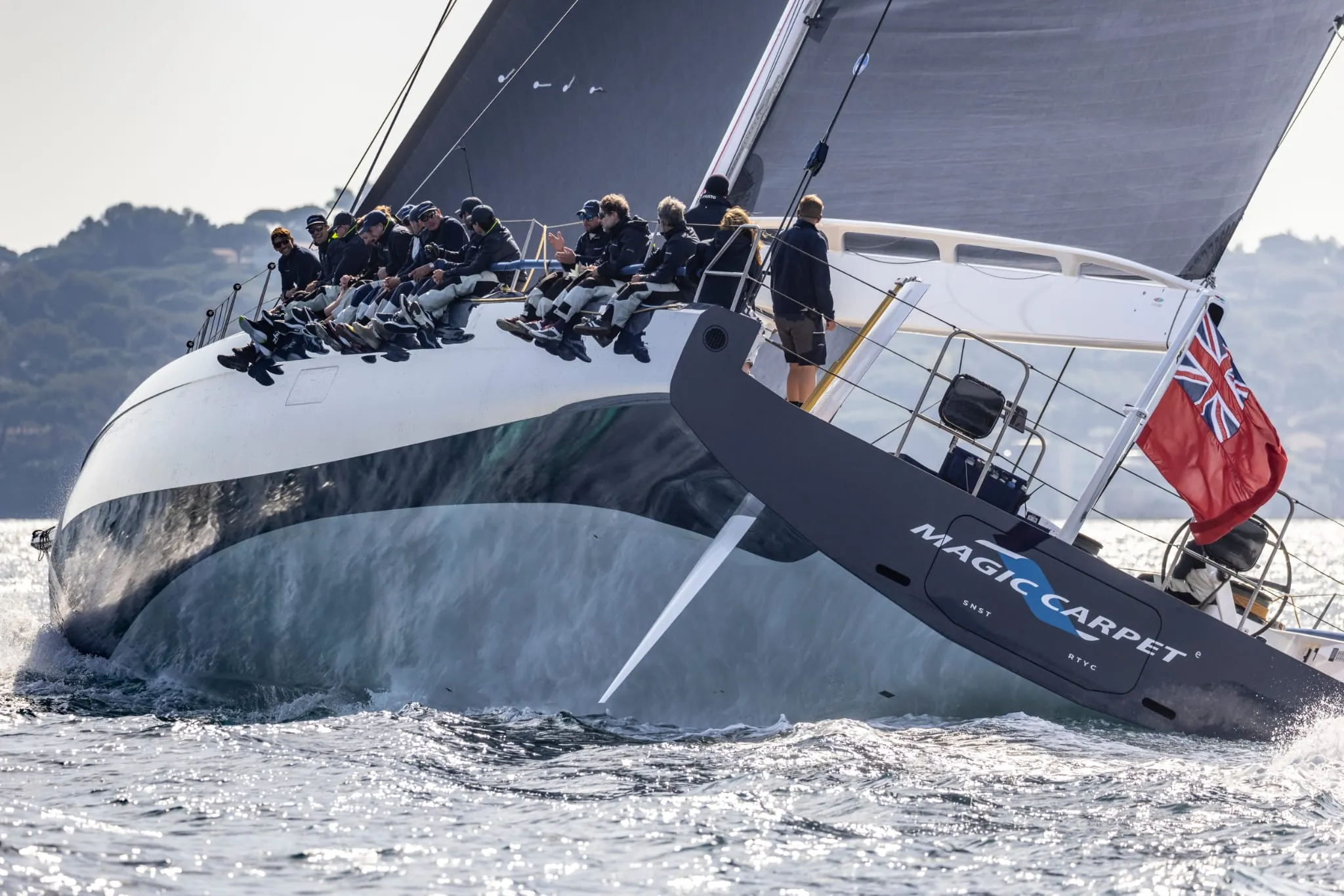
It’s like something out of A Thousand and One Nights. Magic Carpete’s 37 tons are sailing at 15 knots in 10 knots of wind. Mainsail up, genoa 2, jib 2: the Maxi monohull has deployed its medium sails, 1,000 m2 of carbon fabric. The slightest tug on the helm sends her into a tizzy. The winches whistle, the electric pumps on the canting keel mewl. But there’s no sound of a diesel engine. Lined up on the windward rail, fifteen crew members are ready to pounce at the skipper’s slightest command. At the stern, Sir Lindsay Owen-Jones lends me the helm and gives me some sound advice. Thirty years with Maxis makes for a steady hand. The most French of British CEOs has been retired since 2011. He built L’Oréal into a giant in the early 2000s, was knighted by the Queen and awarded the Légion d’honneur. During his career, the dashing Sir Lindsay managed to maintain high-level sporting practices. An accomplished driver, he placed his McLaren fifth in the 24 Hours of Le Mans in 1996. At sea, his flying carpets criss-crossed the Mediterranean, from the Giraglia to the Voiles de Saint-Tropez, often victoriously. As sharp as ever, Sir Lindsay continues to live his passion for the sport. Magic Carpete is the fourth in his line. At 100 feet long, she belongs to the prestigious “Cento” class. Sir Lindsay loves regattas, but also cruises, with family or friends. The boat’s specifications reflect this dual purpose. The interior, designed by Axel de Beaufort, combines comfort and elegance.
Energy self-sufficiency
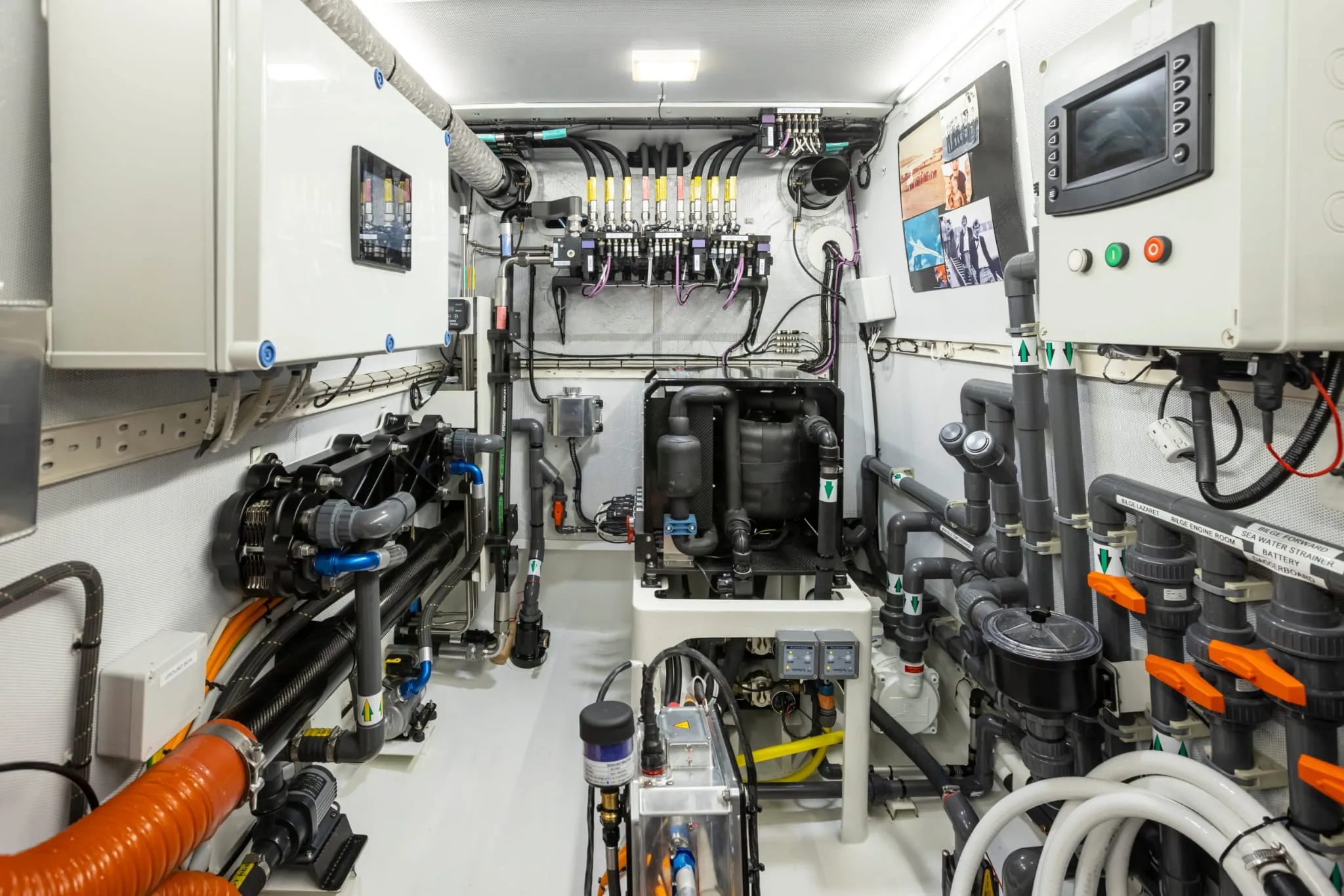
The owner’s third requirement: energy autonomy. A day’s racing for just five hours of charging at the quayside. On Magic Carpet e, all manoeuvres are electric, starting with the keel, a masterpiece imagined by architect Guillaume Verdier and built by the Persico shipyard. Pendent at 45°, it can also be retracted aft: in just a few seconds, the 9-ton bulb can be reduced from 7.1 to 4.6 m draught. A 5.5 m canard provides the anti-drift.
A loyal owner
On this Sunday in April, Magic Carpete sets sail. The red and yellow steeple of Saint-Tropez slowly fades in our wake. A year-round resident of Saint-Tropez, the Maxi has become as much a local landmark as the statue of Brigitte Bardot or the famous gendarmerie. Sir Lindsay, for his part, now lives in Lugano, but remains loyal to his home port… and to his crew.
Dream team
Skipper Danny Gallichan has been with her since 1995. He’s been on every Magic Carpet. Remote control in hand, he adjusts the keel, raises the windward rudder and sets the canard: “It’s like a rudder at the front of the boat. It’s also pendulum-shaped to keep it vertical in the water. On deck, project manager Edward Bell orchestrates the maneuvers. In the cabin, Marcel Van Triest keeps an eye on his screen. An elite sailor and renowned meteorologist, he has guided numerous IMOCA boats, been a strategist in The Ocean Race and sailed in the Jules Verne trophies. For the regattas, Sir Lindsay also calls on Francesco De Angelis, winner of the Louis Vuitton Cup in 2000 with Luna Rossa. The boat leaves the Gulf of Saint-Tropez and heads east in a light springtime chop. Despite its size, the helm is surprisingly lively. But it demands vigilance and precision. Deviations can be costly. Sir Lindsay is at the helm most of the time, especially when racing. The owner is looking forward to taking on the other 100-foot Maxis in the Cento series, which he helped create. He is particularly looking forward to the confrontation with his former boat, Wally Magic Carpet3 (Cubed).
A dynasty of flying carpets
The Magic Carpet dynasty dates back to 1997. Unable to buy the already sold Genie of the Lamp, Sir Lindsay commissioned Luca Bassani to design a boat that would be “innovative, stylish, competitive and fun”. Eighteen months later, the first Wally saw the light of day. A revolution. The next two models will also bear the signature of the famous Italian shipyard. This new Maxi marks an evolution, not a disenchantment with Wally for an owner who admits to having “a lot of admiration for Luca Bassani”. But times have changed. Wally production has become more uniform. Research and prototypes took a back seat. “I could have modernized the old one, lightened it up. But innovation sometimes requires a total rethink. You have to take that risk,” says Sir Lindsay Owen-Jones.
Magic Carpet e and the forty energy thieves
In modern sailing, energy has become crucial. This is obvious at the America’s Cup, and is also true of maxis. With its three electric pumps, complex hydraulic systems, nine-ton canting keel, retractable rudders and giant winches, Magic Carpet e has to deal with forty energy thieves. This was the challenge entrusted to architect Guillaume Verdier: to bring together the best specialists to design an ultra-efficient boat without a combustion engine. The hunt for weight, particularly that of the batteries, was a determining factor. While Magic Carpet3 weighed 47 tonnes when it came out in 2013, Magic Carpete is ten tonnes lighter for the same length. And as the saying goes: the cheapest energy is the one you don’t spend. Persico was the obvious choice. This Italian builder, who designed the Luna Rossa boat for the America’s Cup and supplies the arms for the AC75, knows a thing or two about energy optimization. And since what comes from the America’s Cup must one day return to it improved, it is said that Luna Rossa’s engineers sometimes come in the evening to sip a drink in the bars of the port of Saint-Tropez…