

RC44
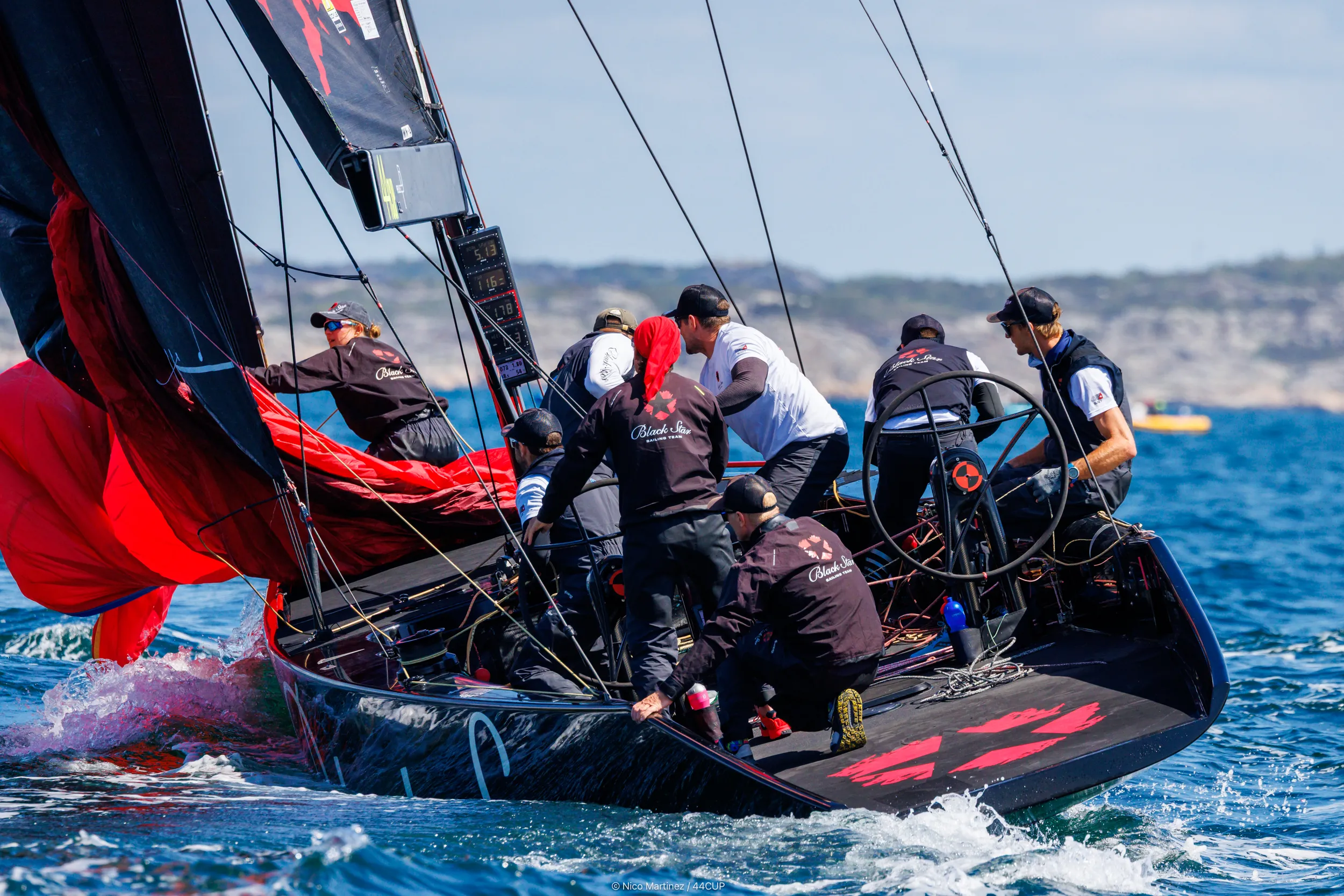
Swedish sailing aboard the Swiss boat Black Star Sailing. At almost twenty years old, the one-design series created by Russell Coutts in 2005 is on the rise. The series is becoming increasingly popular with owner-barters. Here’s how it works.
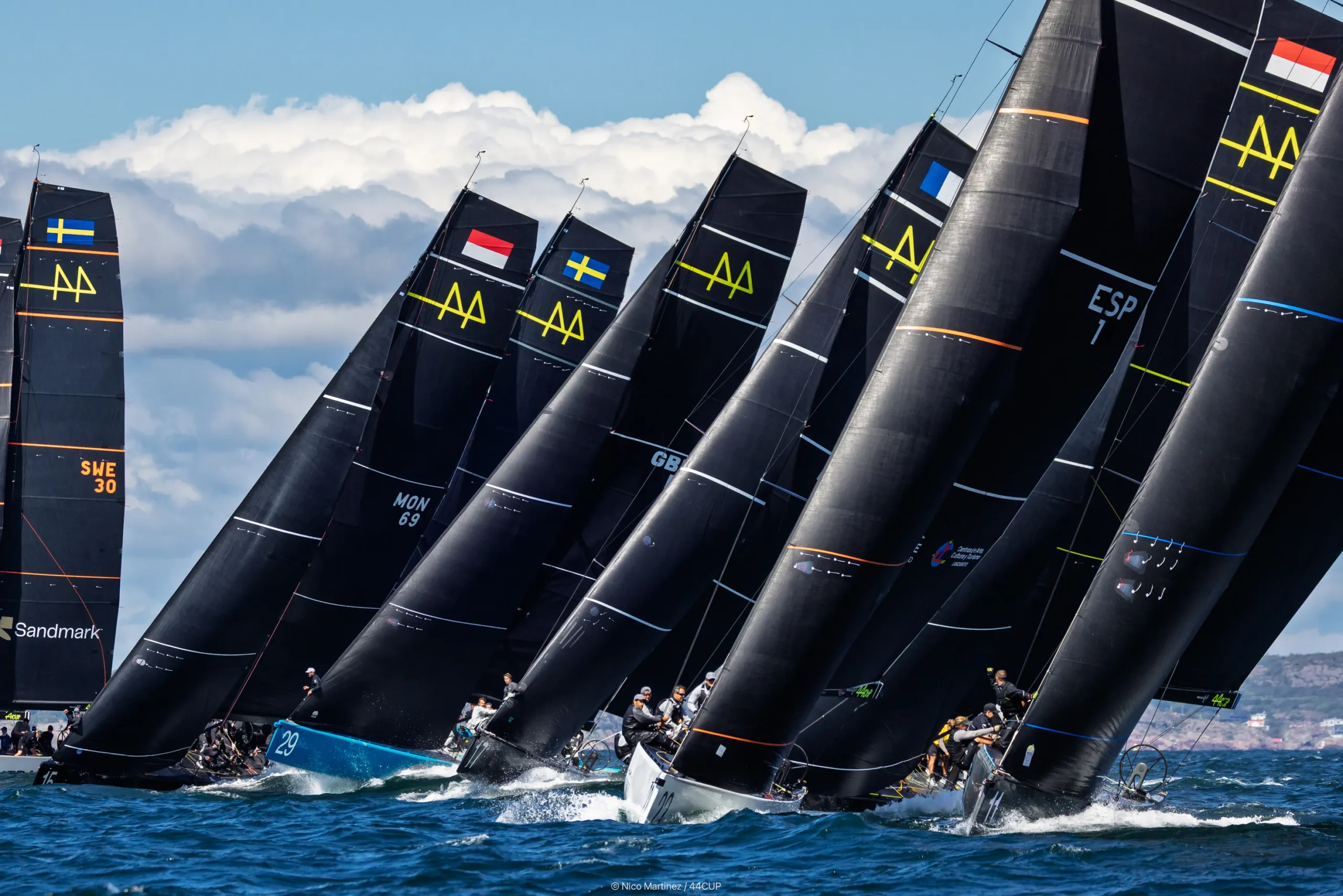
At the summer solstice, the Swedes deck themselves out in flowers. The people of the north celebrate the longest day of the year, love and life. On the island of Marstrand, it’s also the time of the annual RC44 migration. A tradition maintained at the invitation of Torbjörn Törnqvist (Artemis Racing). “I’m very happy to host the series every year in my country, in a typical little village and in this very special archipelago of Marstrand.” This year, from June 24 to 28, twelve units were present, three more than the previous year. At the invitation of the series, Skippers went on site to understand the renewed vitality of this class imagined by Russell Coutts and Slovenian Andrej Justin, built in Hungary in 2005 and launched in
launched in 2007.
In Marstrand, the Swiss team Black Star Sailing put up a good fight. Red spinnaker, black star: Zurich-born Christian Zuerrer’s colors began to shine on the GC32 circuit in 2019. Present since this year in the Cape 31 class, they have also existed in the RC44 for four years. It’s not easy to play your part in this demanding circuit. Regattas are tight, and every false note is paid for in cash. “We need to improve our starts,” says the skipper at the start of the event. A statement that was undoubtedly beneficial: before our very eyes, the majority of Black Star’s starts were pretty good. “We want
to be in the top half of the rankings”, insists the owner-builder. And the Swiss team’s consistency could have paid off. But with ten rounds completed, the objective was not achieved. The Swiss finished in seventh place, level on points with Ceeref Vaider (SLO). This was due to an eleventh-place finish in the second regatta. Positions are so tight in the RC44, that one or two poor performances can ruin a ranking.
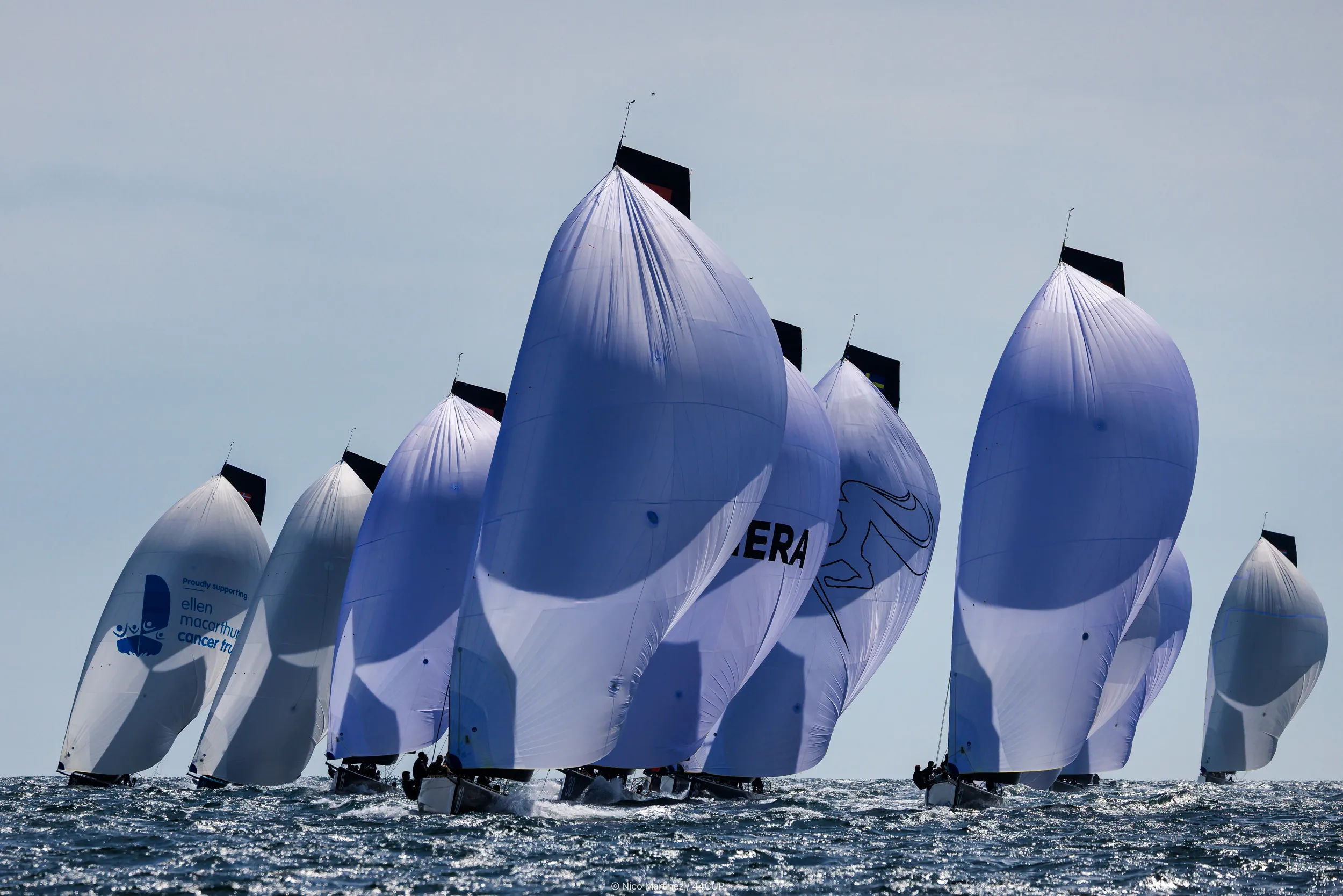
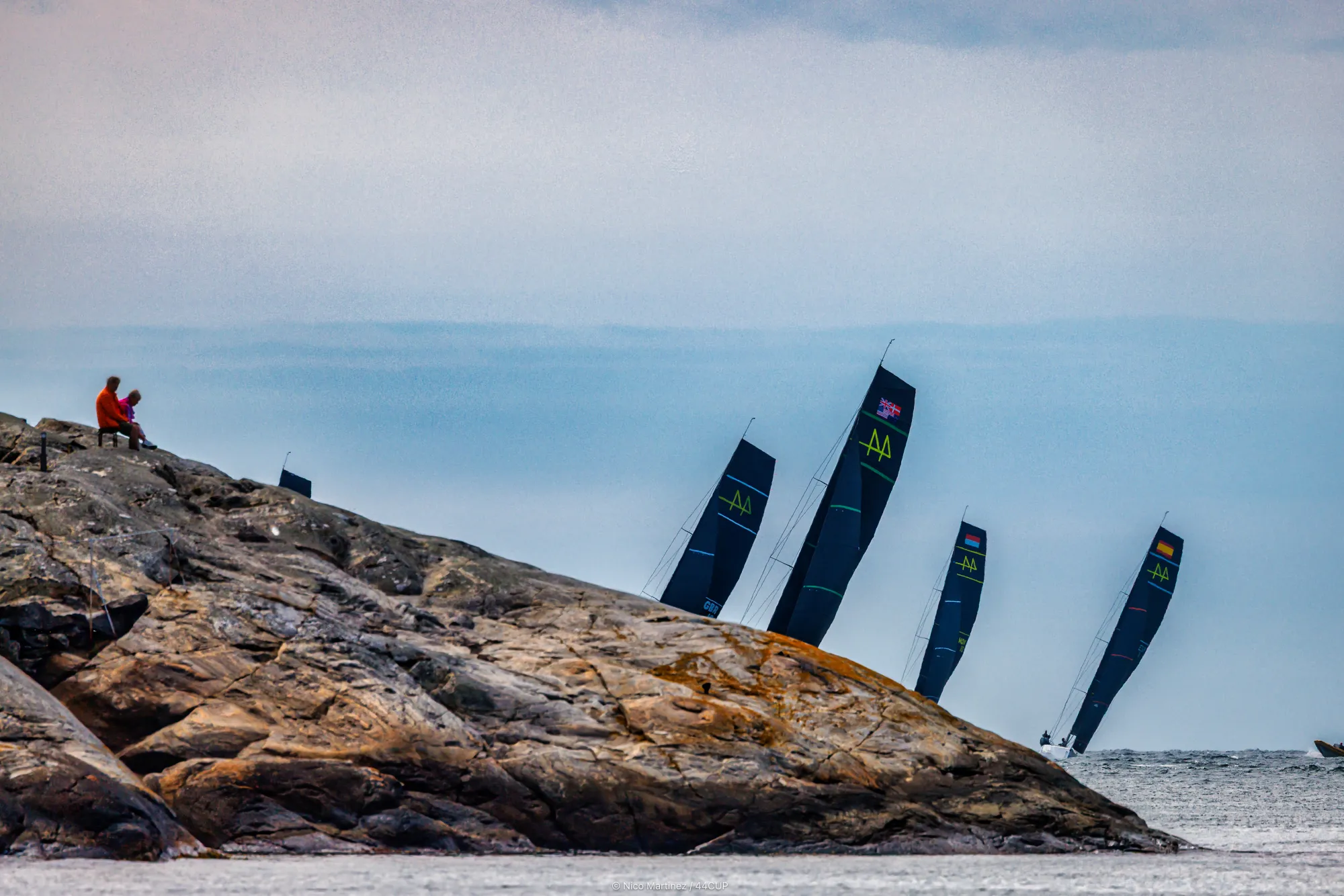
There’s no doubting the demands of one-design racing. The whole fleet often passes the marks in the same minute. The atmosphere at the buoys is electric. The second day of racing was marked by three collisions. Artemis Racing paid the price with a gaping hole on its starboard stern. Fortunately, the organization was up and running. A night in the technical area and the damage was repaired. The sails, too, had their express service. In the organization’s sail loft, technicians from Quantum, North Sails and Doyle, the three sailmakers represented, repair and optimize in real time. In the parking lot, twelve 20-foot containers house the crew’s workshops. A technical village in which the organization and its spare parts store take pride of place. Once the skirt has been removed, the boat and mast slip into a 40-foot container, ready to set sail for new horizons. In Sweden, assembly of the twelve boats was completed in just one week. The specifications for this series guarantee “turnkey” delivery to owner-builders. It also ensures a smooth organization from the point of view of the host sites. Marie-Hélène Polo, one of the owners of Marina di Puntaldia in Sardinia, was visiting Marstrand. For this private marina, which doesn’t necessarily have all the technical infrastructure, “the organizational quality of the circuit” is just as important as that of the boats and sailors. The 2025 season includes five events. A schedule meticulously coordinated with that of the TP52s, Swanns and other SailGPs. Crew members, who are often involved in several circuits, need to be able to move from one to the other without hindrance. Since 2005, some thirty RC44s have been built. More are on order. The series abandoned match racing and its complications in 2017. All that remains is fleet racing. The vitality of this owner-driver class today perhaps exceeds the initial ambitions of its creator, Russell Coutts. But what is it that attracts so many owner-drivers? For Chris Bake, president of the class, the answer is manifold: “People are realizing the value of a strong one-design. We’ve also started building new boats. We’re now in a position to integrate new owners quickly. It’s an attractive environment, with excellent camaraderie between competitors.” With loyal owners and some of the best sailors in the world, the RC44 circuit is a top-level one-design. The Marstrand leg was no exception. And in the end, the big names came out on top: victory for Team Nika skippered by Bulgarian Vladimir Prosikhin, ahead of Aleph Racing, helmed by Italian Pietro Loro Piana, then Team Charisma skippered by Dutchman Nico Express. In the organization’s sail loft, technicians from Quantum, North Sails and Doyle, the three sailmakers represented, repair and optimize in real time.
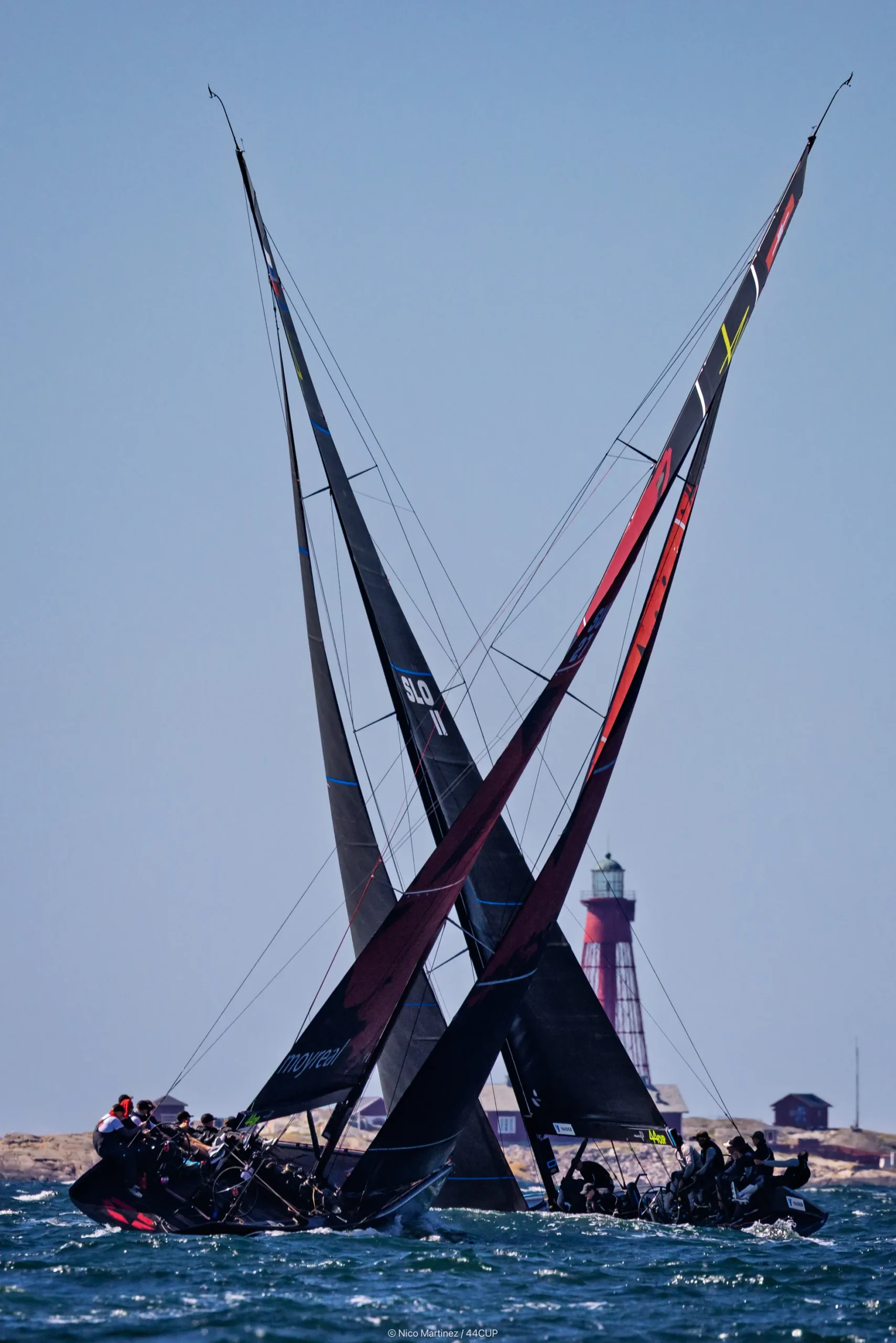
SEVENTH PLACE, LEVEL ON POINTS
WITH THE SLOVENIANS
OF CEREEF VAIDER. ©Nico Martinez
In the parking lot, twelve 20-foot containers house the crew’s workshops. A technical village in which the organization and its spare parts shop take pride of place. Once the skirt has been removed, the boat and mast slide into a 40-foot container, ready to set sail for new horizons. In Sweden, assembly of the twelve boats was completed in just one week. The specifications for this series guarantee “turnkey” delivery to owner-builders. It also ensures a smooth organization from the point of view of the host sites. Marie-Hélène Polo, one of the owners of Marina di Puntaldia in Sardinia, was visiting Marstrand. For this private marina, which doesn’t necessarily have all the technical infrastructure, “the organizational quality of the circuit” is just as important as that of the boats and sailors. The 2025 season includes five events. A schedule meticulously coordinated with that of the TP52s, Swanns and other SailGPs. Crew members, who are often involved in several circuits, need to be able to move from one to the other without hindrance. Since 2005, some thirty RC44s have been built. More are on order. The series
abandoned match racing and its complications in 2017. All that remains is fleet racing. The vitality of this owner-driver class today perhaps exceeds the initial ambitions of its creator, Russell Coutts. But what is it that attracts so many owner-drivers? For Chris Bake, president of the class, the answer is manifold: “People are realizing the value of a strong one-design. We’ve also started building new boats. We’re now in a position to integrate new owners quickly. It’s an attractive environment, with excellent camaraderie between competitors.” With loyal owners and some of the best sailors in the world, the RC44 circuit is a top-level one-design. The Marstrand leg was no exception. And in the end, the big names came out on top: victory for Team Nika, skippered by Bulgarian Vladimir Prosikhin, ahead of Aleph Racing, helmed by Italian Pietro Loro Piana, then Team Charisma, skippered by Dutchman Nico Poons. A second group follows close behind, with two Swedish boats, including young Markus Törnqvist’s GeMera, helmed by Italian tactician Francesco Bruni.
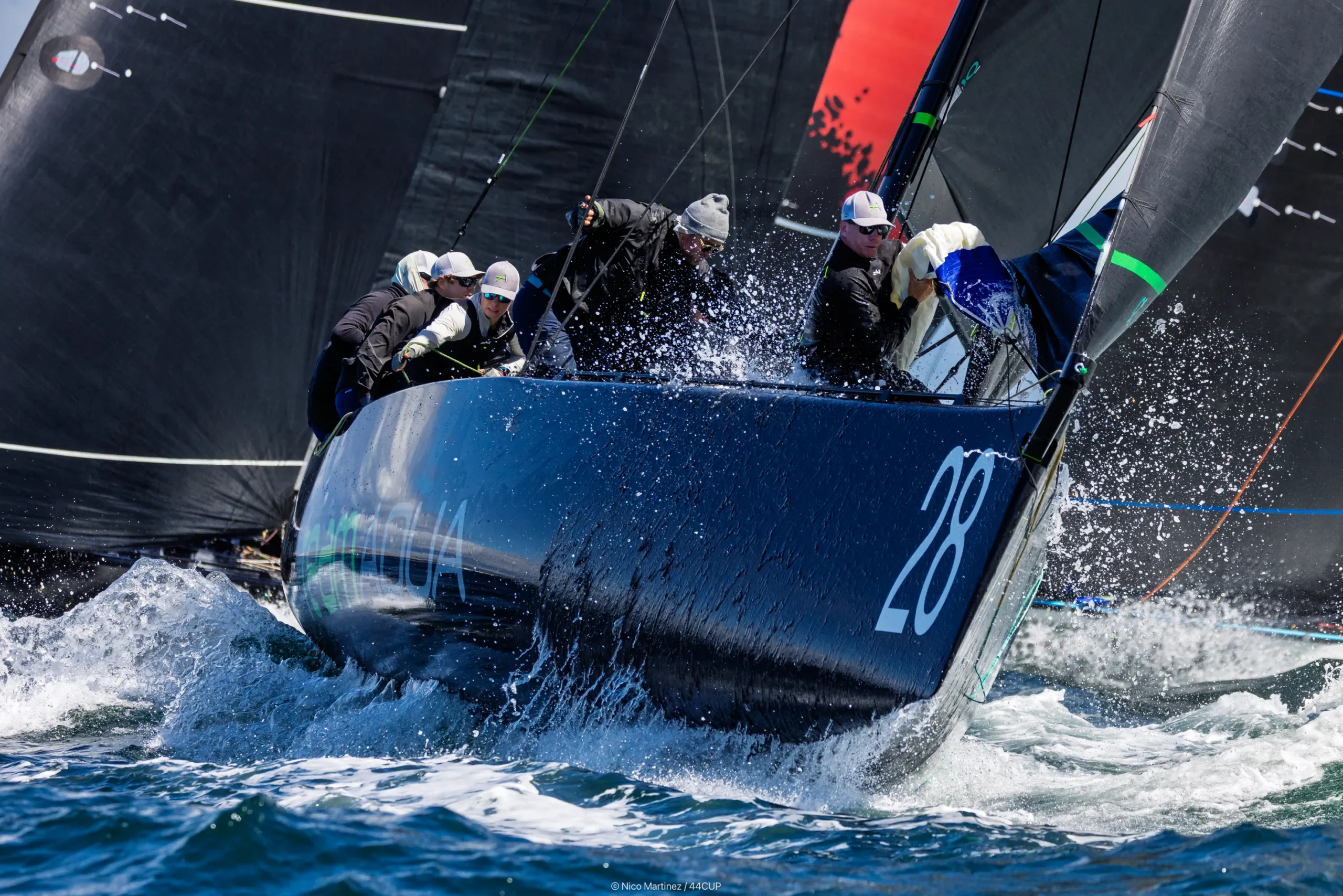
For series organizer Bertrand Favre, the Swedish week was a success. Only one day of racing had to be cancelled due to strong winds. Nordic conditions and a satisfactory result. And the future looks bright: “I think we can easily go up to fourteen boats. Beyond that, we’ll have to think a bit about the logistics, but I think we’re ready to welcome new owner-steerers.