

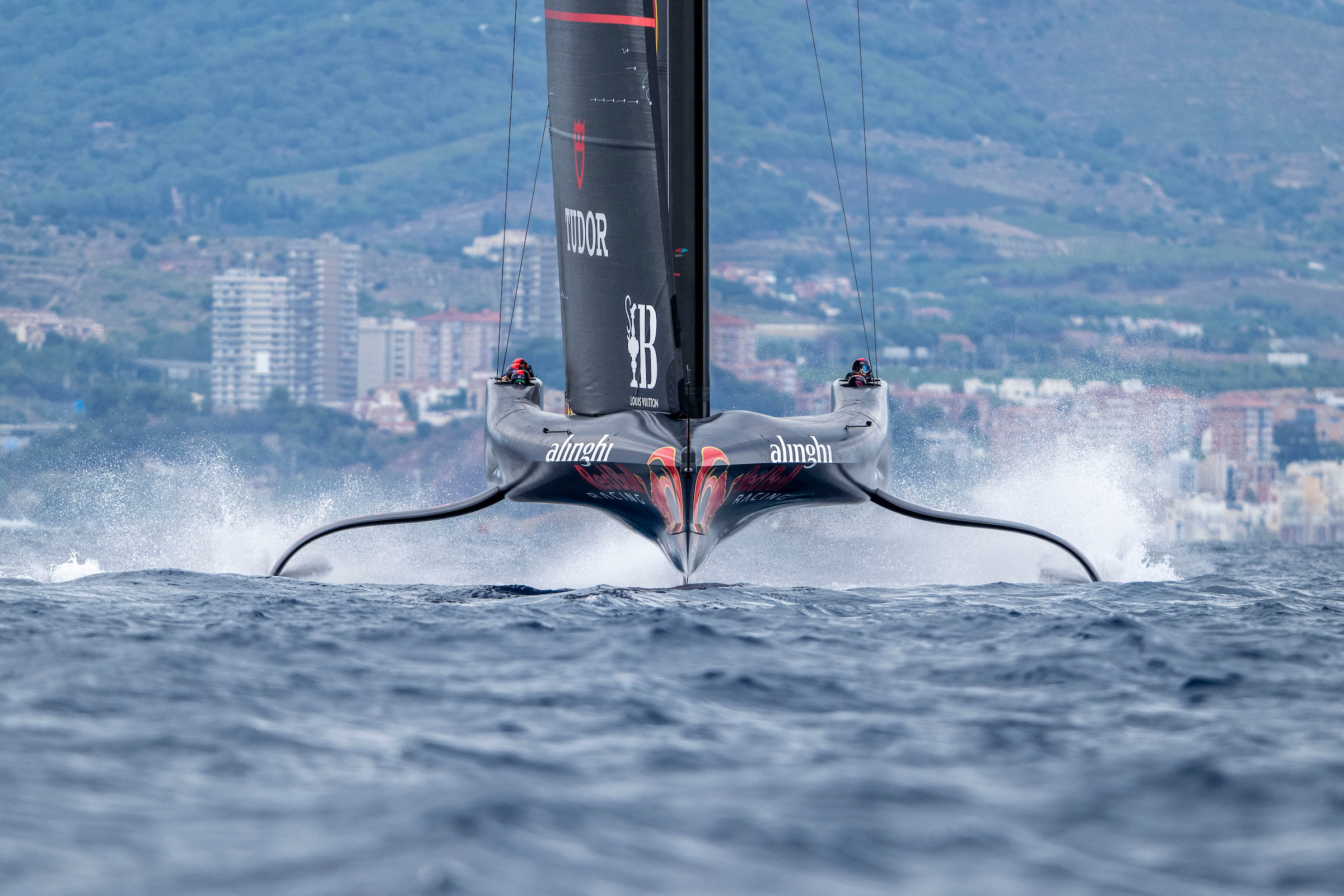
The 38 th edition of the America’s Cup will be held in 2027 in the Bay of Naples. Between technological continuity with the AC75 flying monohulls, new rules of governance and a desire to make the competition more sustainable, the oldest international sporting event is attempting to open a new chapter. For the teams taking part, including Switzerland’s Tudor Team Alinghi, the road to Naples begins… in less than 2 months!
America’s Cup 2027: a well-known revival
With Vesuvius as its backdrop and the Bay of Naples as its natural stage, the 38 th America’s Cup promises a spectacular setting for one of the most demanding competitions in world sport. Scheduled for the summer of 2027, this edition marks a new stage in the evolution of the regatta created in 1851 and, as such, the oldest still running.
While the event remains a unique technological laboratory in the world of sailing, the organizers have sought to limit the excesses that sometimes undermined some of the first 37 editions. The aim is clear: to maintain innovation while reducing costs, guaranteeing a more balanced competition between the teams and avoiding court disputes, which are costly in terms of money and image for the protagonists.
Rethinking governance to stabilize competition
One of the most significant changes concerns the governance of the event. The organizers have set up a collaborative structure bringing together several major teams to define a common framework for the future of the competition. This approach aims to bring greater stability to an event often marked by complex negotiation cycles between Defender and Challengers.
This willingness to cooperate should also make the America’s Cup more sustainable. By limiting certain technological expenses and encouraging the pooling of resources, teams are seeking to reduce the environmental and financial footprint of their campaigns. In a sport where the quest for performance often leads to an increase in the number of prototypes and logistical journeys, this development marks an important new awareness.
AC75s still at the heart of the show
On the water, the great novelty is paradoxically continuity. The AC75s, monohulls capable of flying above the water thanks to their foils, will remain the boats used for the final competition.
These spectacular machines can exceed 50 knots and have transformed the face of modern regattas. Their impressive speed is accompanied by a new strategic dimension, where precise maneuvering and onboard energy management become decisive factors.
For this new edition, however, the technical rules have been adjusted to limit the arms race. Certain parts will be standardized, and development possibilities restricted, in order to promote sporting fairness while reducing development costs.
The environmental dimension is also more present, with greater attention paid to the energy consumption of technical bases and the logistical movements of teams.
First step in 2026 with the AC40
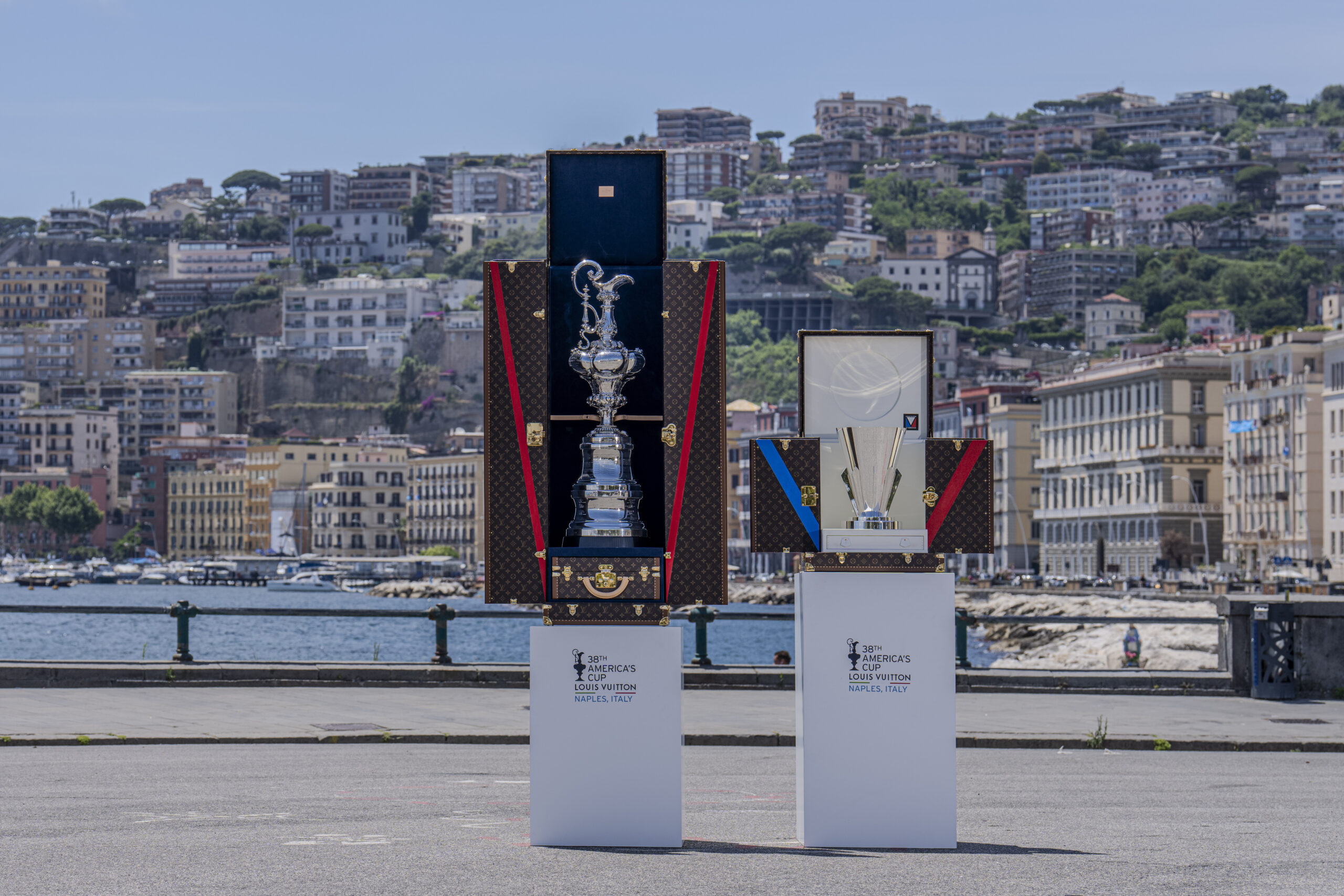
Prior to the Neapolitan Cup, the competition will gradually enter its active phase from May 2026. The first preparatory regatta will take place in Cagliari, Sardinia, from May 21 to 24.
These preliminary events will take place on AC40s, one-design flying monohulls designed to provide a common training platform for teams. More compact than the AC75s, but just as spectacular, these boats enable crews to work on their automatisms and strategies in a real competition setting.
Eight fleet races are scheduled for May 22 and 23, before the final on the 24th, which will feature three fleet races and a match race for the two best teams.
As for the 37 th edition, the AC40s will enable youngsters and women to compete in a dedicated America’s Cup.
Alinghi’s long-term strategy
In this renewed landscape, the Swiss Tudor Team Alinghi appears to be one of the most structured projects. Having made its mark on America’s Cup history with victories in 2003 and 2007, the Swiss outfit is now looking to build a solid long-term campaign.
The partnership with the Tudor watch brand is part of this strategy. The aim is not just to get back into the competition, but to build a team capable of making a lasting mark on the Cup landscape.
Société Nautique de Genève, which is leading the Swiss challenge, is counting on a combination of experience and new talent. In a competition where technological mastery is essential, team stability and project continuity are decisive factors.
Opposite the Swiss, four other teams will be competing for the Cup: the New Zealand Defender, the British Challenger of Record, the Italians from Luna Rossa and the French team from K-Challenge.
Follow us on www.americascup.com