

From La Gitana, the yacht of Baroness Julie de Rothschild, launched on Lake Geneva in 1876, to the maxi Edmond de Rothschild, a flying maxi-trimaran launched last February, the five-arrow team is celebrating a century and a half of an extraordinary maritime saga this year. A legend born on our waters.
Text) Olivier Evain
Julie, the Admiral of Lake Geneva
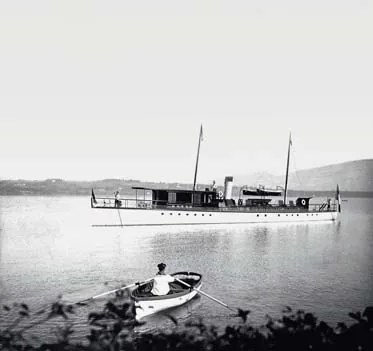
150 years. A century and a half. And it all began here, in Switzerland, on Lake Geneva to be precise. In 1875, Baroness Julie de Rothschild, who lived at Pregny Castle, dared to do what no member of her family — and very few women of her time — had ever dared: acquire, in her own name, a steam-powered boat built for speed. Uncompromising, she rejected two prototypes she considered too slow — a model of one of them is still preserved at the Musée du Léman in Nyon — before turning to the London-based Thornycroft shipyard.
And the name? Just a few weeks before she placed her order, Bizet had premiered Carmen in Paris, twenty years after Verdi’s Il Trovatore and its gypsy character Azucena had triumphed. By christening her steamer La Gitana, transported in pieces by rail and then assembled during the summer of 1876 in Morges by Thornycroft’s English workers, the woman who had been married for convenience chose a name that sounded like an act of rebellion.
From the moment she was launched, on September 21, 1876, the woman affectionately nicknamed “the Admiral” by those around her took charge of the manoeuvres herself, sole master aboard, and went on to rack up victories in regattas. On April 3, 1879, La Gitana shattered the world speed record, reaching 20 knots. And when, in 1897, a neighbour from Prangins finally dethroned her with La Sevillana, Julie, now 68, was furious and immediately commissioned Gitana II. The world’s fastest “yachting lady” would sail until the last summer of her life.
Edmond, the Art of Racing
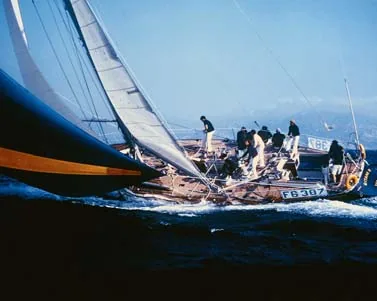
After the eclipse of the dark years, Edmond de Rothschild, Maurice’s son and Julie’s chosen heir, rekindled the flame in the early 1960s, decreeing — an owner’s little affectation — that Gitana would henceforth take the masculine form.
With Gitana IV, winner of the Fastnet Race in 1965 in record time, the Baron established his style: excellence combined with conviviality. On board, the sailors addressed one another formally; ashore, when invited to dinner by the Aga Khan, they would mischievously reply: “With pleasure, there will be fifteen of us. I sail with my friends, and I dine with my friends.”
Founder of the Maxi class in 1984, Edmond’s greatest race was ultimately one of succession. At the Helsinki regattas in 1982, he discovered, half amused and half irritated, his son Benjamin at the helm of Gitana Junior, there to challenge Gitana Senior. The father-and-son duel was worth any testament.
The Age of Multihulls and Flying Boats
Inheriting the family legacy in 1997, Benjamin de Rothschild founded Gitana Team in 2000, a professional offshore racing team that was then unprecedented, identified by the five arrows symbolising the family’s five branches.
Lionel Lemonchois’s surprise victory in the 2006 Route du Rhum, aboard Gitana 11, established the team as a force to be reckoned with. Then came the audacious gamble, pursued from 2015 onwards with his wife Ariane: to make a maxi-trimaran fly on the open ocean. Gitana 17, launched in 2017, would pioneer this new era. And what a pioneer: ten victories and fifteen podium finishes in sixteen races, a Route du Rhum record in 2022 and, in 2024, Charles Caudrelier’s victory in the Arkéa Ultim Challenge, the first solo around-the-world race for the Ultim class.
Maxi Edmond de Rothschild, the Latest Addition
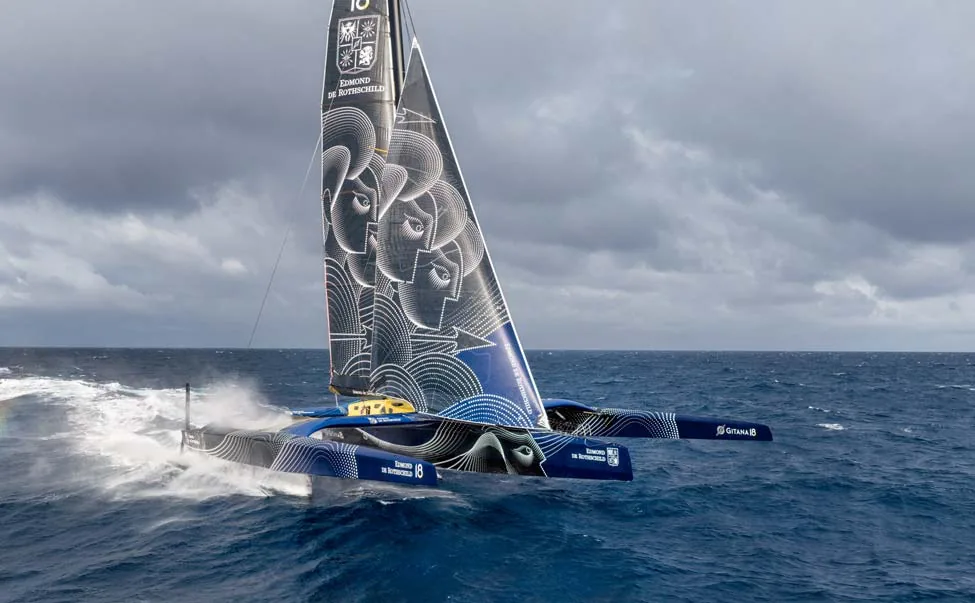
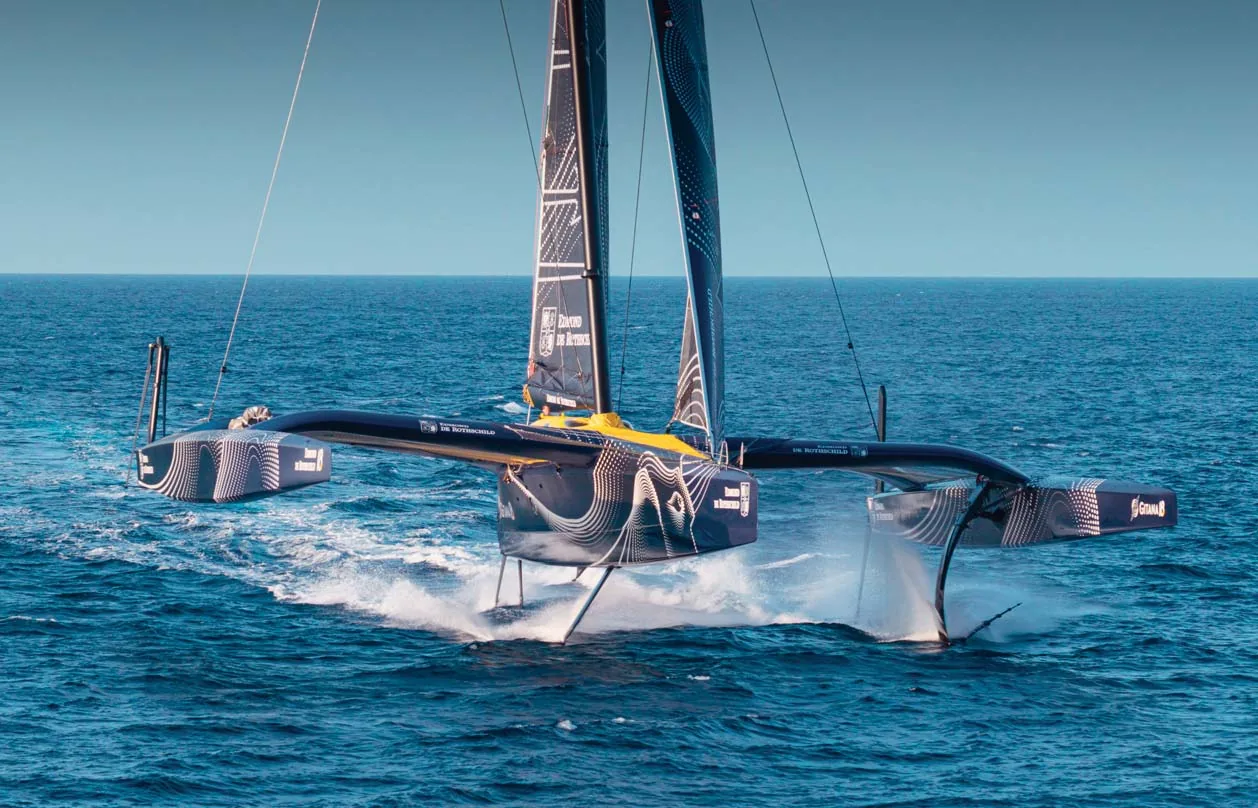
The latest chapter, for now, is being written as we speak. Unveiled on December 3 last year in Lorient and launched in February, the maxi Edmond de Rothschild, the twenty-eighth boat in the saga, aims to take another step forward: moving from hybrid flight to fully flying.
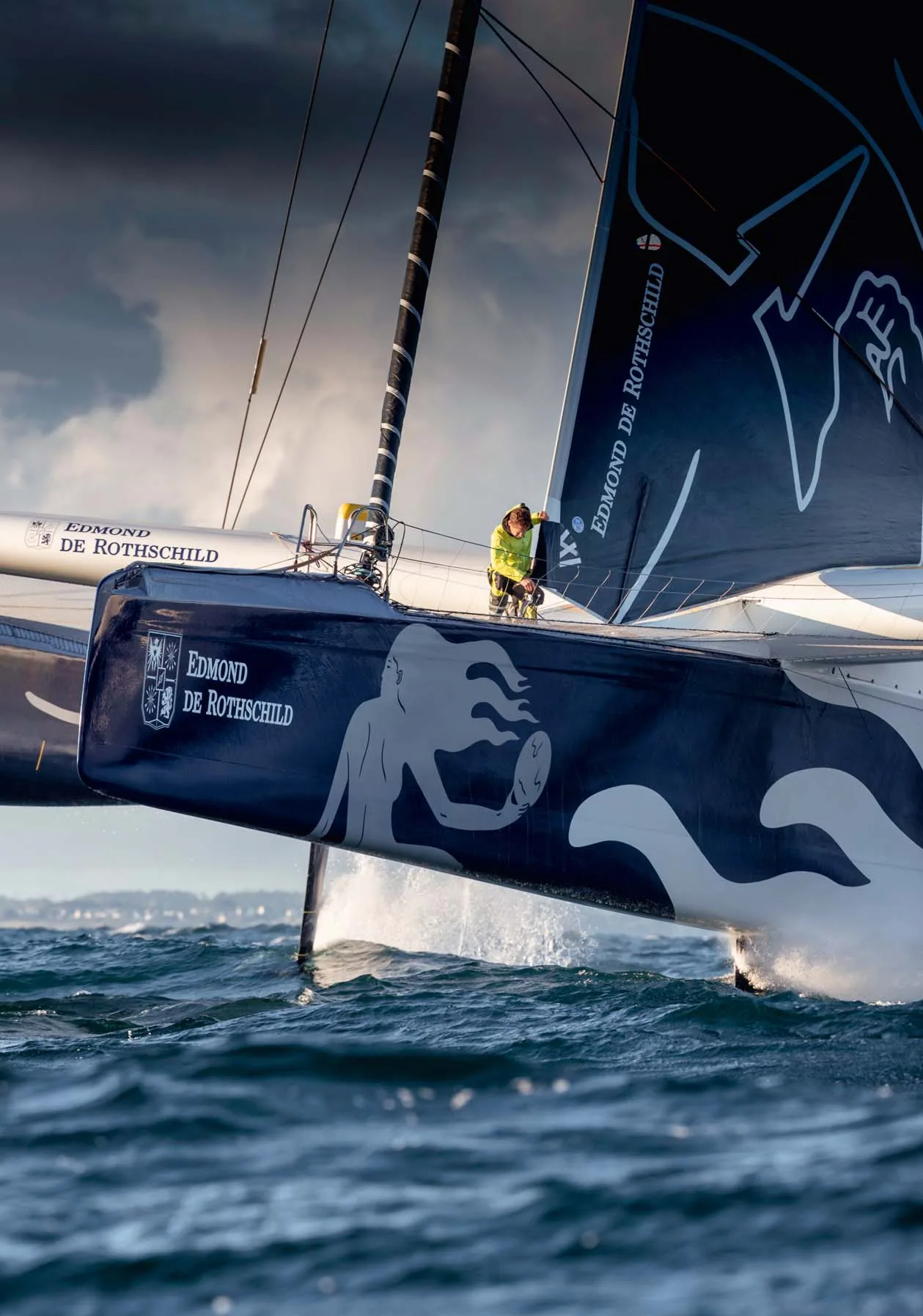
The figures behind this carbon giant are dizzying: 32 metres long, 23 metres wide, a mast rising more than 38 metres, yet weighing just 19.5 tonnes; 200,000 hours of construction, 50,000 hours of design and engineering, and more than 200 people involved. Its weapons? Retractable Y-shaped foils inspired by the America’s Cup, rudders designed to withstand cavitation, a canting daggerboard and adjustable spreaders that can be tuned dynamically to bend the mast while sailing — innovations never before seen at this scale.
All of this is expected to deliver a 10 to 15% increase in speed, on a total flying surface of just… 8 square metres.
“The ideal would be to be able to fly very high without ever touching the waves. We hope to be able to fly in three-metre swells and reach an average sailing speed very close to 40 knots,” explains Charles Caudrelier.
The work is also an artistic statement: created by Florian and Michaël Quistrebert in collaboration with the Palais de Tokyo, its monumental design depicts five female faces on the sails — those of Ariane de Rothschild and her four daughters. The passing of the torch, once again.
The first major rendezvous comes on November 1, with the start of the Route du Rhum. Somewhere above Lake Geneva, the Admiral must be smiling.
Photos ) Yvan Zedda, Yann Riou, Eloi Stichelbalt, Gitana SA