Is your boat a little slower than the figures quoted in the manufacturer’s brochure? Is fuel consumption slightly higher than expected? That’s part of everyday life for boat owners. Fortunately, there are simple ways to improve performance while using less fuel!
By Jean-Christophe Guillaumin
A clean hull: the starting point for optimum performance
The hull is the foundation of your boat. It determines its handling, performance and comfort. But even a slight layer of fouling can dramatically increase drag through the water – by as much as 20 to 30%! This inevitably leads to higher fuel consumption and a loss of speed at a constant engine rpm.
In practical terms, an annual haul-out and hull treatment at the beginning of the season, including the application of a quality antifouling coating, is the simplest and most cost-effective way to optimise performance and fuel consumption. The choice of paint and application method is crucial: applying antifouling with a roller leaves a rougher surface that compromises water flow and reduces efficiency. Regular cleaning throughout the season is also essential to maintaining optimum performance.
A specialist treatment of the underwater hull to reduce friction through the water can provide a real benefit. However, these products are expensive, and the fuel savings will rarely, if ever, justify the investment. When it comes to boosting performance, though, this solution can be highly effective!
The right propeller: an investment you’ll never regret
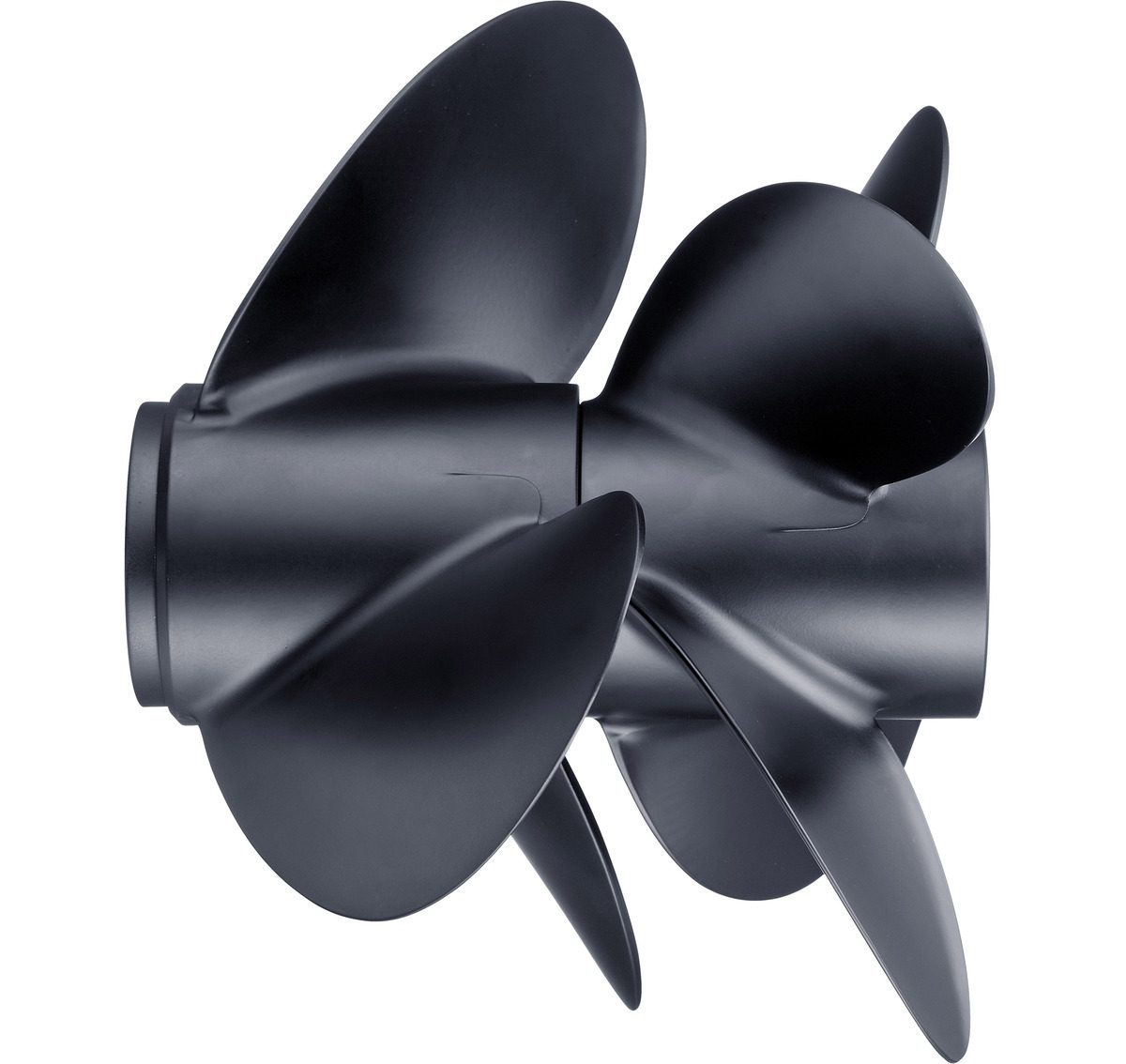
This brings us to the heart of the propulsion system. The propeller is precisely where some of the most significant gains can be made, both in performance and fuel efficiency. Propeller pitch determines the theoretical distance travelled with each revolution: if the pitch is too low, the engine revs freely without sufficient load; if it is too high, the engine struggles to reach its rated rpm and consumes excessive fuel.
The diagnostic method is straightforward and within the reach of any attentive boat owner. Simply check the engine rpm at full throttle: if the engine fails to reach the maximum rpm recommended by the manufacturer (usually specified in the technical manual), the propeller is over-pitched. Conversely, if the engine exceeds that rpm, the pitch is too low. In either case, the engine is operating outside its optimum efficiency range, and fuel consumption rises sharply.
Replacing or professionally re-pitching the propeller can reduce fuel consumption by 5 to 10%, while also improving acceleration and top speed – sometimes for just a few hundred francs. A genuinely worthwhile investment!
Engine optimisation: the ultimate performance upgrade
An engine is made up of several interdependent systems which, when correctly adjusted and regularly serviced, operate within their optimum efficiency range. By contrast, a neglected or poorly tuned engine can use 5 to 15% more fuel than one in good condition. The first step, therefore, is to follow the manufacturer’s maintenance recommendations, particularly when it comes to injectors, filters, belts and other components.
You can take things a step further by calling on a specialist to optimise the engine mapping and improve performance. However, take care not to invalidate the manufacturer’s warranty: it is essential to use a technician certified by your engine manufacturer.
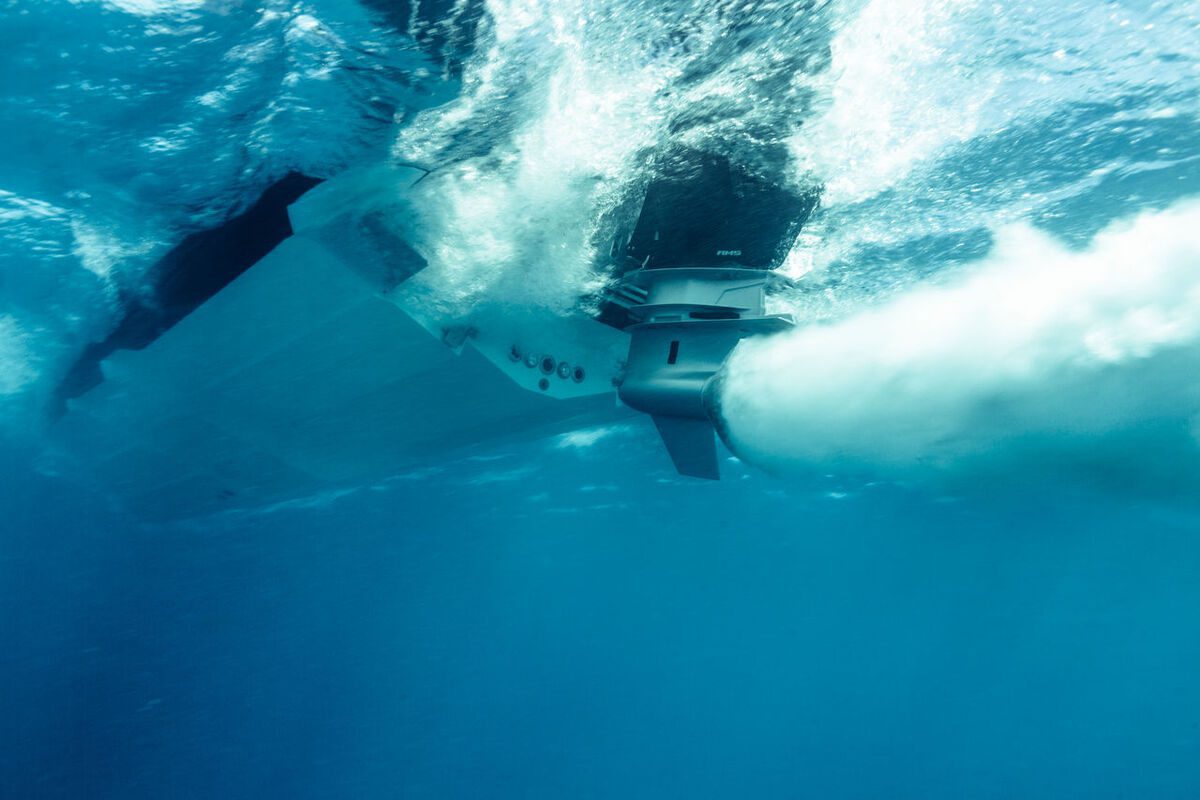
Clean hull, optimised propeller, engine in peak condition? All that’s left is to head out on the water. But don’t overlook one crucial adjustment: trim, the angle of the outboard engine in relation to the hull. On most modern boats, trim adjustment is automatic, but the automatic setting is not always the most efficient.
If the trim is too far down, the bow digs in and the wetted surface increases. If it is too far up, the propeller begins to ventilate and loses its grip on the water. The ideal position varies according to speed, onboard load and sea conditions. Getting it right can add 1 to 2 knots at the same engine rpm and reduce fuel consumption by 5 to 10%.
Learning to make these dynamic adjustments – continually fine-tuning the trim just as you would adjust your sails – is undoubtedly one of the most valuable skills a powerboat owner can acquire. It is the key to travelling faster, further and more comfortably, while using less fuel …